

Why Do I Sleep Better When I Eat Carbs at Night?
Why some people sleep better after eating carbohydrates in the evening, what kind of carbs are most likely to help, and how timing, amount, and meal composition can change the effect.


It can feel confusing when you sleep better after eating carbohydrates at night, especially if you have heard that eating late is always bad for sleep. One night you have a dinner with rice, potatoes, oats, fruit, or another carbohydrate source, and you fall asleep more easily. Another night you keep dinner very low in carbs, skip food for a longer fasting window, or try to stay lighter in the evening, and your body feels strangely alert when it should be winding down.
That does not necessarily mean that a huge late meal is good for sleep. It also does not mean that sugar before bed is the answer. But it does suggest something important: your sleep is not only responding to bedtime. It is responding to your fuel state, meal timing, stress level, digestion, blood sugar stability, and the way your body interprets the transition from day into night.
If you sleep better when you eat carbs at night, it may be because those carbs help your body feel fed, calm, and less threatened by the overnight fast. For some people, especially during caloric restriction, long fasting windows, hard training, or very low-carb eating, an evening meal without enough carbohydrates can leave the body feeling under-fueled rather than relaxed. In that state, bedtime can feel less like a natural descent into sleep and more like a quiet stress test.
The short answer
Some people sleep better when they include carbohydrates in the evening because carbs can make the meal feel more satisfying, reduce hunger, support relaxation, and help prevent the “wired but tired” feeling that can happen when the body senses a fuel shortage at night. This is especially common when someone is eating less overall, training hard, fasting longer, or following a very low-carb nutrition plan before their body has adapted to it.
The important distinction is that “carbs at night” does not mean “sugar right before bed.” A balanced dinner with slower-digesting carbohydrates is very different from a large dessert, candy, sweet drink, or highly processed snack close to sleep. Slow carbs tend to enter the bloodstream more gradually, especially when eaten with protein, fat, and fiber. Sugar can create a sharper rise and fall, which may make sleep worse for some people.
Evening carbs are not a universal sleep rule. Some people sleep better with them, some feel no difference, and some sleep worse if they eat too much or too close to bed. A more useful question is personal: does your body sleep better when the evening meal includes enough slow, steady fuel to carry you through the night?
Why carbs at night might help some people sleep


Carbohydrates can affect sleep through several overlapping pathways. The simplest one is satiety. If your dinner is low in carbohydrates and not especially filling, you may technically have eaten enough calories but still feel unsatisfied by bedtime. You may not feel dramatic hunger, but your body may still interpret the night as a low-fuel period.
This matters because sleep requires a sense of safety. Your brain is not trying to optimize sleep in isolation; it is trying to keep you alive. If your internal state suggests that energy availability is low, stress hormones are elevated, or blood sugar may fall too far during the night, the body may become more alert. That alertness can show up as trouble falling asleep, lighter sleep, early waking, or waking in the middle of the night feeling uncomfortable without immediately knowing why.
Carbohydrates may also support sleepiness through amino acid and neurotransmitter pathways. When a meal contains carbohydrates, insulin rises to help move glucose into tissues. Insulin can also shift the balance of certain amino acids in the blood, which may make tryptophan relatively more available to the brain. Tryptophan is a precursor involved in serotonin and melatonin pathways, both of which are connected to sleep-wake regulation. This does not mean carbs are a sedative, but it helps explain why the composition of a meal can feel different at night even when the calories are similar.
There is also a psychological and behavioral layer. A meal that feels complete can help the evening feel complete. When someone is restricting food, avoiding entire categories of food, or trying to “be good” at night, bedtime can become mentally active. The body may be tired, but the mind is still negotiating hunger, cravings, rules, or restraint. For some people, including a reasonable portion of slower carbohydrates at dinner reduces that friction and makes it easier to move into the night without feeling deprived.
Why this can happen during caloric restriction, fasting, or very low-carb eating


This pattern often becomes more obvious when someone is eating less than usual. If you are in a caloric deficit, your body is already receiving a signal that energy availability is lower. That does not automatically ruin sleep, but it can make sleep more sensitive to meal timing and composition. If dinner is also very low in carbohydrates, your body may enter the night with less easily available fuel than it expects.
This is closely related to the pattern described in Why Can’t I Sleep in a Calorie Deficit?. The issue is not only whether your stomach feels empty. It is whether your body feels like it has enough energy to downshift safely. A person can eat a dinner that is high in fat and protein and still find that sleep is worse than after a dinner with the same calories but more carbohydrates. In that case, the difference is not simply fullness. It may be the metabolic signal created by the meal.
Long fasting windows can create a similar effect. If you stop eating early, delay your first meal, train during the day, and then keep dinner low in carbohydrates, the overnight period may feel like an extension of an already long fuel gap. Some people do well with that. Others become more wakeful, especially if the change is sudden or paired with stress, heavy exercise, or poor sleep from previous nights.
Very low-carb eating can also make sleep feel different, particularly during the transition period. Some people eventually adapt well to a low-carb or ketogenic-style nutrition plan, but others notice lighter sleep, more nighttime waking, or a harder time falling asleep. That does not mean low-carb eating is always bad for sleep. It means that sleep may be one of the first places your body reveals whether your current nutrition pattern is working for you.
The difference between carbs, sugar, and a heavy late meal
One reason this topic gets confusing is that “carbs” can mean very different things. A bowl of oats, potatoes, lentils, fruit, or rice with a balanced meal is not the same as a large sugary snack right before bed. Both contain carbohydrates, but they can create very different effects.


Slower carbohydrates are not just foods that happen to sit in the stomach longer. The bigger difference is how the carbohydrate is structured and how quickly it is broken down into glucose and absorbed. Some carbohydrates create a gentler rise in blood sugar and insulin, while others hit faster. That response is also shaped by the rest of the meal. Protein, fat, and fiber can slow the overall glucose response and make the meal feel steadier. For many people, that kind of dinner is more likely to support sleep than a very sugary snack.
Sugar can be more disruptive when it is eaten in a way that creates a sharper rise and fall in blood glucose, especially as a large sweet snack on its own close to bed. In some people, that later drop can trigger stress signals. That response can feel like waking up hot, shaky, anxious, hungry, restless, or strangely alert. It is not always true clinical hypoglycemia, and many people will not experience it, but the subjective experience can still be very real. If you want something sweet, it will usually land differently at the end of a balanced meal than by itself late at night.
A more useful question is not whether sugar before bed helps in theory. It is whether a balanced dinner with some slower carbohydrates leaves you calmer and more stable through the night. The distinction matters. If a person sleeps better after a balanced dinner with carbs but worse after dessert close to bed, those are not contradictory results. They are two different nighttime inputs.
Why eating too close to bed can still disrupt sleep
Even if evening carbohydrates help you sleep, timing still matters. A large meal right before bed can keep the digestive system active when the rest of the body is trying to downshift. It may raise body temperature, increase reflux risk, create discomfort, or make it harder to settle into deeper sleep. If late meals are part of your pattern, How Late Meals Affect Sleep goes deeper into that side of the issue.
The better pattern is often not a huge meal at the edge of bedtime. It is a dinner that is satisfying enough and timed early enough that digestion is underway before you lie down. For many people, that means including slow carbohydrates at dinner rather than waiting until they are hungry, restless, or craving something sweet right before sleep.

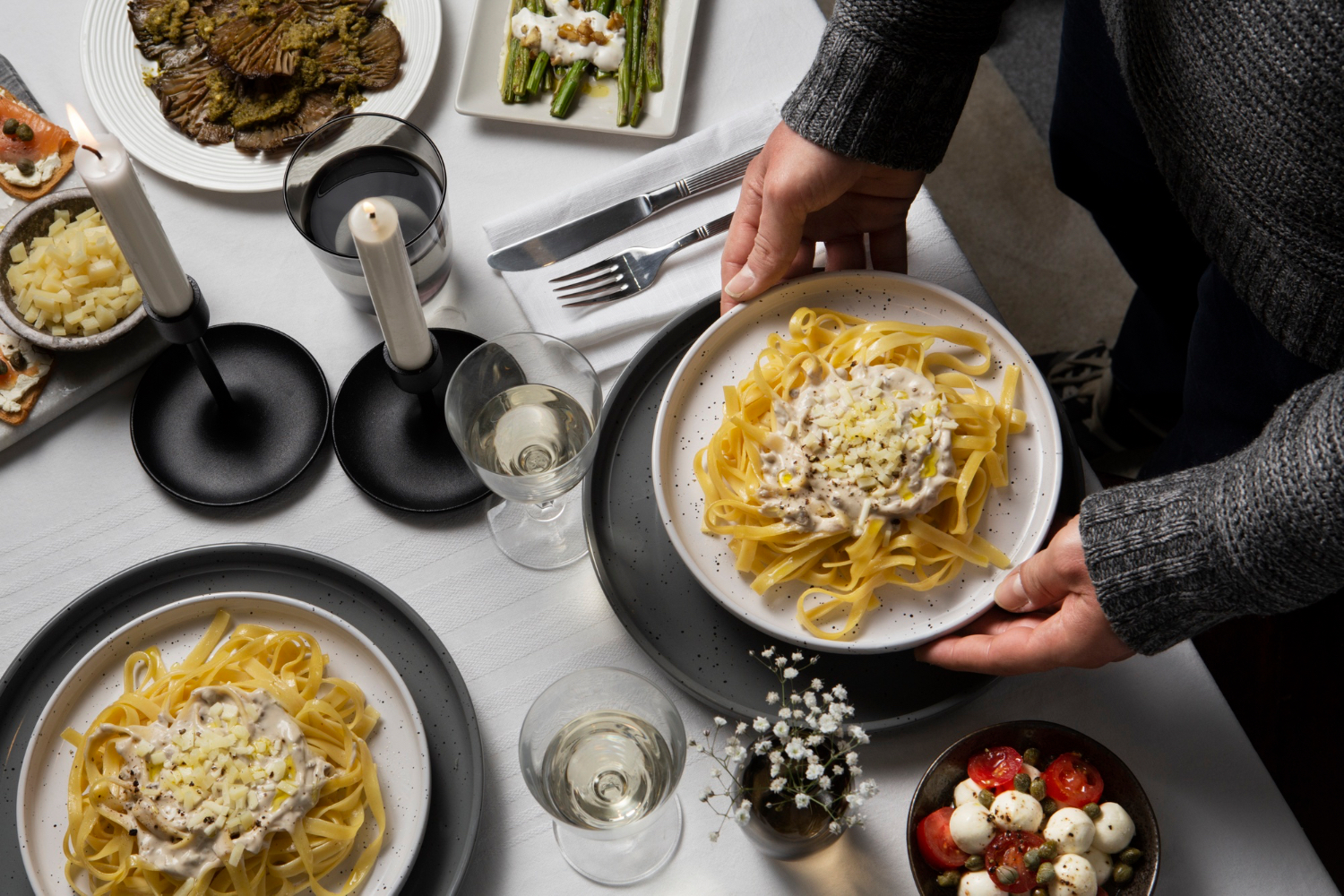
There is a subtle but important difference between eating in a way that supports the night and eating so late that the meal becomes part of the sleep disruption. Carbs may help with the first problem while worsening the second if the timing, amount, or food choice is off. This is why blanket rules do not work very well. The same food can feel helpful at 7:00 p.m. and disruptive at 11:30 p.m.
Why some people sleep worse with late carbs
Some people do not sleep better with carbohydrates at night. They may feel warmer, more restless, more reflux-prone, or more likely to wake during the night. This can happen if the meal is too large, too sugary, too close to bed, or simply not a good match for their digestion and metabolism.
Blood sugar variability is one possible reason. A highly processed or sugary evening snack may produce a stronger glucose rise and fall than a balanced meal. For someone sensitive to those swings, the night may become less stable rather than more stable. They may fall asleep quickly at first but wake later feeling uncomfortable or wired.
Digestive load is another reason. A large late meal can fragment sleep even if the food itself is not “bad.” The body can be tired, the brain can be ready for sleep, and digestion can still be active enough that your system is devoting energy and attention to processing the meal instead of settling fully into sleep. This is especially true when carbs are combined with a very large total meal, alcohol, spicy food, or lying down soon after eating.
There is also individual variation. Some people do better with a larger dinner. Others do better with most of their food earlier in the day. Some need more carbohydrates after evening training. Others need a lighter evening meal to avoid reflux or restlessness. What matters is noticing which pattern actually leaves you sleeping more steadily.
How to approach evening carbs in real life


If you think this may be part of your pattern, start gently. Big sudden changes can create their own problems, especially when your body is already sensitive around bedtime. Instead of swinging from a very low-carb dinner to a huge late meal, try a more balanced dinner with a moderate portion of carbohydrates and stay with that pattern for several nights. Give your body enough time to show you whether the evening feels steadier.
What you are looking for is simple: does a balanced dinner with some slower carbohydrate work better for you than a very low-carb dinner? That meal could include protein, vegetables, and a portion of rice, potatoes, oats, beans, lentils, fruit, or another carbohydrate your body handles well. The exact food matters less than the overall pattern: steady fuel, not a sugar spike; enough food, not an overloaded stomach; a reasonably consistent dinner time, not a random midnight snack.
Pay attention to the specific part of sleep that changes. Do you fall asleep faster? Wake less often? Stop waking at 3:00 a.m. hungry or alert? Feel warmer or worse? Feel better the next morning? Sleep quality is not just one number, which is why What “Good Sleep Quality” Actually Means can be helpful if you are trying to interpret the result.
It also helps to separate hunger from alertness. If you cannot sleep because your stomach is obviously empty, that is one pattern, and Why Can’t I Sleep on an Empty Stomach? goes deeper into it. But if you are not exactly hungry and still feel wired, restless, or strangely awake after a low-carb dinner, the issue may be less about stomach fullness and more about the body’s perception of fuel availability.
What this says about nutrition and sleep


This is a good example of why nutrition and sleep have to be understood in context. The question is not whether carbs are universally good or bad at night. The question is what your body does with a specific meal, at a specific time, in the context of your whole day.
A person who sat indoors all day, barely moved, ate late, and had a sugary snack before bed may sleep worse with evening carbs. A person who trained hard, ate lightly, walked a lot, and kept dinner very low in carbohydrates may sleep better when they add slow carbs back into the evening meal. Those are not the same situation. The sleep response depends on the whole pattern.
This is also why a personalized plan is more useful than a generic rule. Your sleep can be shaped by meal timing, carbohydrate amount, food type, training load, caffeine timing, light exposure, stress, and bedtime consistency. A single rule like “never eat carbs at night” or “always eat carbs before bed” ignores the actual system your body is responding to.
Lumaneos approaches this from the perspective of daily signals. Food is one of those signals, but it is not isolated. A balanced evening meal may help sleep because it changes fuel availability, satisfaction, digestion, blood sugar stability, and the body’s sense of nighttime safety. That is very different from treating carbs as a magic sleep hack.
The bigger pattern: your sleep responds to the whole day’s fuel timing
When you sleep better after eating carbs at night, your body may be telling you that sleep is connected to the way you are fueling the day. It may not be asking for more sugar. It may not even be asking for a larger dinner. It may be asking for a steadier evening transition: enough food, enough slow fuel, enough time to digest, and less stress around the night.
Sleep is not only the result of what you do after getting into bed. It is shaped by the signals your body receives across the day, including light, movement, caffeine, meals, stress, and timing. Nutrition is one of those signals because the body does not separate sleep from energy availability.
If carbs at night help you sleep, the best interpretation is not “carbs are the solution.” It is that your body may sleep better when the evening feels metabolically steady instead of deprived, spiked, or overloaded. For some people, that steadiness includes a moderate amount of slow carbohydrates at dinner. For others, it may mean adjusting timing, total food intake, or meal composition in a different way.
If you have noticed this pattern in yourself, it makes sense that it may take a little time to find what works best for you. Sleep and nutrition can be surprisingly sensitive, especially when evenings already feel off. But small adjustments can make a real difference. With a bit of patience, a steadier dinner, a little more fuel at the right time, or a more balanced evening pattern may be enough to help both your sleep and your nutrition start feeling better.
Next up
If you want to understand how meals fit into the bigger picture of sleep, read A Daily Plan for Better Sleep. It introduces the larger idea that sleep responds to the signals of your whole day, not just what happens at bedtime.