

Why Do I Fall Asleep After Dinner and Then Can’t Sleep at Bedtime?
A clear explanation of why an early evening crash can make bedtime harder later, and how post-meal sleepiness, evening naps, light, and timing can split your night.
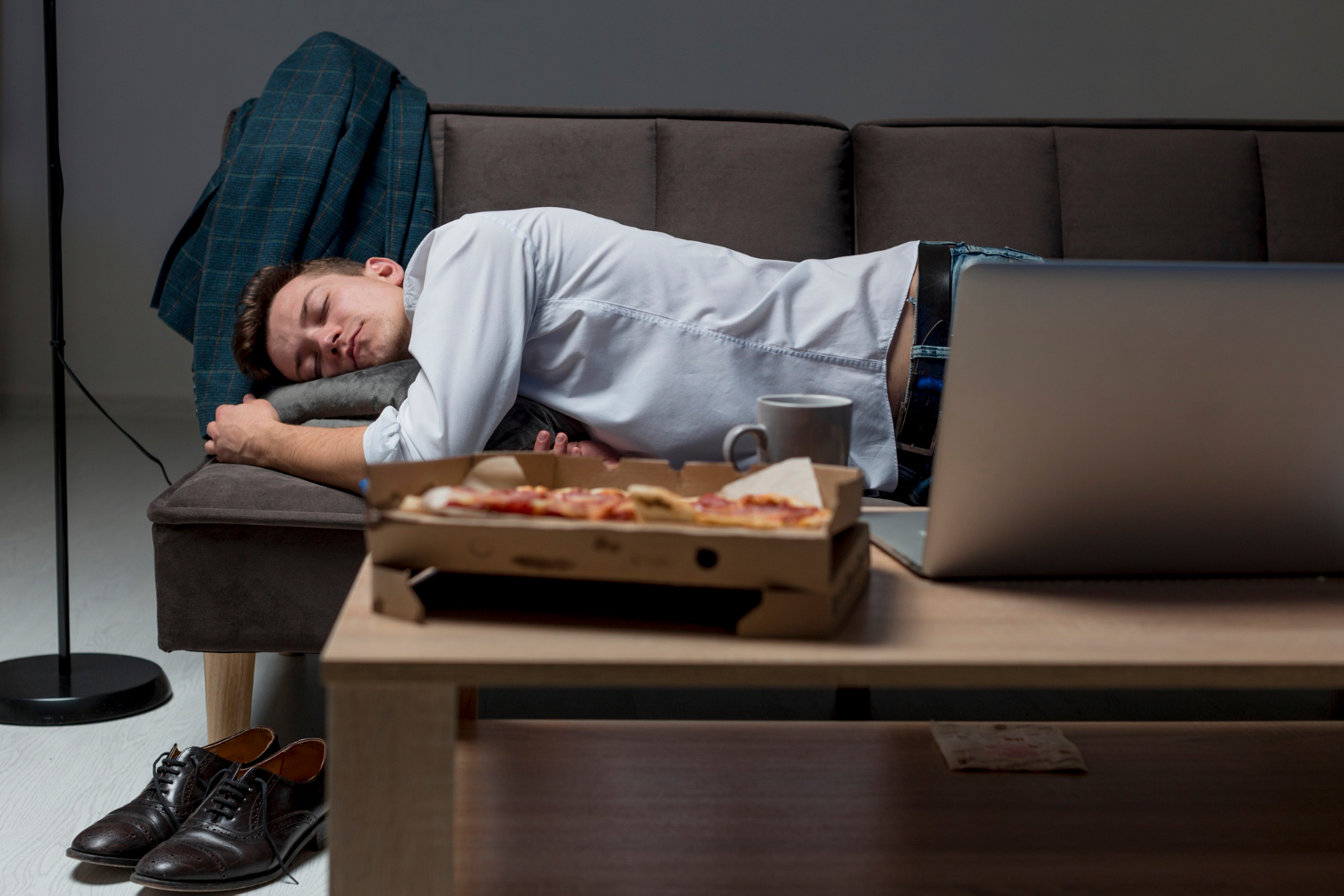
If you fall asleep after dinner and then cannot sleep at bedtime, the problem is usually not only that dinner made you sleepy. The bigger issue is that you may be accidentally splitting your night into two parts. You crash early on the couch, wake up later, restart your evening, expose yourself to light and stimulation, and then expect your body to fall asleep again as if nothing happened.
That can be hard because the first sleep episode already changed the state of your system. Even a short accidental evening nap can spend some of your sleep pressure, interrupt the gradual transition into night, and make your “real” bedtime feel strangely difficult. You may still want to sleep. You may even feel frustrated that you were exhausted an hour or two earlier. But biologically, the conditions that made sleep easy after dinner may no longer be the same by the time you get into bed.
This is why the pattern can feel so confusing. You were sleepy enough to fall asleep without trying, but later you are awake enough to lie in bed wondering what happened.
The short answer
If you fall asleep after dinner and then cannot sleep at bedtime, several things are probably overlapping. Dinner may increase sleepiness, especially if the meal is large, late, carbohydrate-heavy, or eaten after a long tiring day. At the same time, your sleep pressure may already be high from being awake all day. Once you sit down in a dim, comfortable place after eating, your body has fewer reasons to stay alert, so you drift off.
The problem begins when that accidental early-evening sleep becomes long enough to affect your night. Sleep pressure is one of the major forces that helps you fall asleep. It builds while you are awake and decreases while you sleep. If you spend some of it on the couch at 7:30 or 8:00 p.m., you may have less pressure available when you try to sleep at 10:30 or 11:00 p.m.
Then the wake-up itself can make things worse. You get up, turn on lights, check your phone, clean the kitchen, brush your teeth, take the dog out, finish work, or start thinking again. Those signals tell your brain that the evening is not actually ending yet. By the time you get into bed, your sleep pressure is lower, your alertness may be higher, and your bedtime routine has become less of a smooth descent and more of a restart.
So the pattern is not simply:
“I ate dinner, so now I cannot sleep.”
It is more often:
“I became sleepy after dinner, slept too early, woke back up, reactivated my body and brain, and then tried to sleep again before enough sleep pressure and nighttime signals had rebuilt.”
That distinction matters because it points to a different solution. You are not just trying to avoid post-dinner sleepiness. You are trying to protect the continuity of your evening so that sleep happens once, in bed, at the time you actually want the night to begin.
Why dinner can make you sleepy
Post-dinner sleepiness is common, and it does not always mean anything is wrong. Eating changes your internal state. Digestion requires energy, blood flow shifts toward the gut, and the body moves into a more parasympathetic state, which is the calmer “rest and digest” side of the nervous system. If you were already tired, the meal can make that tiredness easier to feel.
The composition and timing of dinner can also matter. A large meal may create a stronger sense of heaviness. A meal high in refined carbohydrates may create a faster shift in blood glucose and insulin, which can leave some people feeling drowsy. Alcohol, even in small amounts, can add sedation early in the night while making sleep less stable later. A late meal can also compress digestion into the same window where your body is trying to prepare for sleep.
But in this specific pattern, dinner is not the whole story. Many people feel a little sleepy after dinner and still sleep normally at bedtime. The issue is when post-dinner sleepiness combines with the right conditions for an accidental nap: a couch, dim light, warmth, stillness, a show you are not deeply engaged with, and a body that has been accumulating sleep pressure all day.

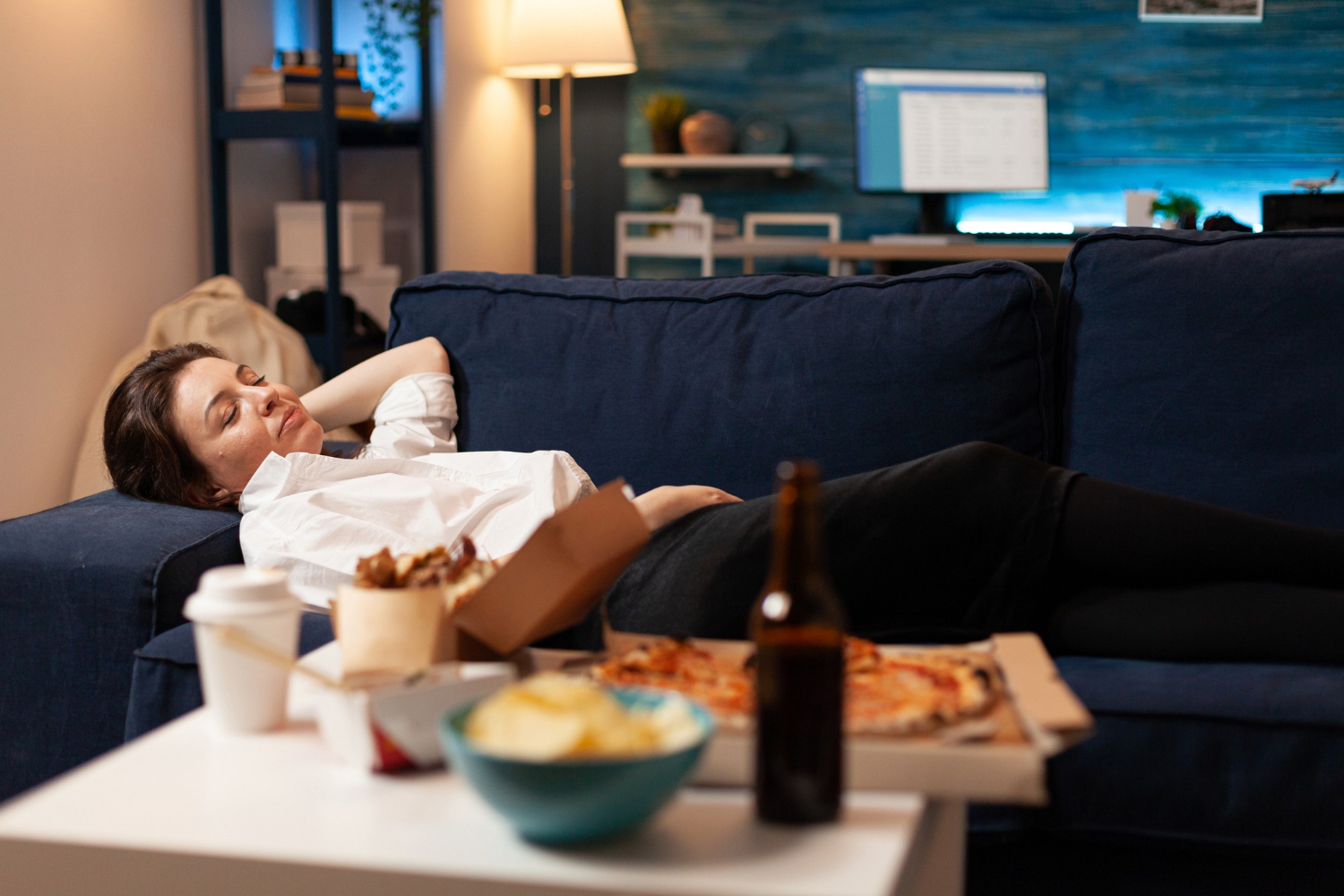
That is why this often happens in the early evening rather than immediately at the table. The meal starts the shift, but the environment finishes it. You stop moving, stop talking, stop working, and stop giving your brain strong daytime signals. The body notices the opening and takes it.
This can be especially likely if your previous night was short or fragmented. Sleep pressure will be higher than usual, so the post-dinner dip feels stronger. In that case, the evening crash is not just about the meal. It is also your body trying to collect sleep that it did not get earlier.
For more on the meal side of this pattern, read How Late Meals Affect Sleep.
Why an evening nap can make bedtime harder
An accidental evening nap is different from simply feeling sleepy. Once you actually fall asleep, even for a relatively short time, you begin reducing the sleep pressure that helped you fall asleep in the first place. This matters because sleep pressure is one of the main reasons bedtime works. It is the biological “weight” of wakefulness that makes sleep feel possible and eventually unavoidable.
One of the key molecules involved in this process is adenosine. Adenosine builds up in the brain during wakefulness and is associated with increasing pressure to sleep. When you sleep, that pressure starts to decline. You do not need to understand every detail of adenosine to understand the practical point: being awake makes sleep pressure rise, and sleeping makes it fall.
That is useful when the sleep happens at the right time. It is less useful when it happens too early. If you fall asleep after dinner for 20, 40, or 90 minutes, your body may treat that as the beginning of the night. But when you wake up and resume your evening, you create a gap between the first piece of sleep and the main sleep period. By the time you get into bed, you may not have rebuilt enough pressure to fall asleep easily.
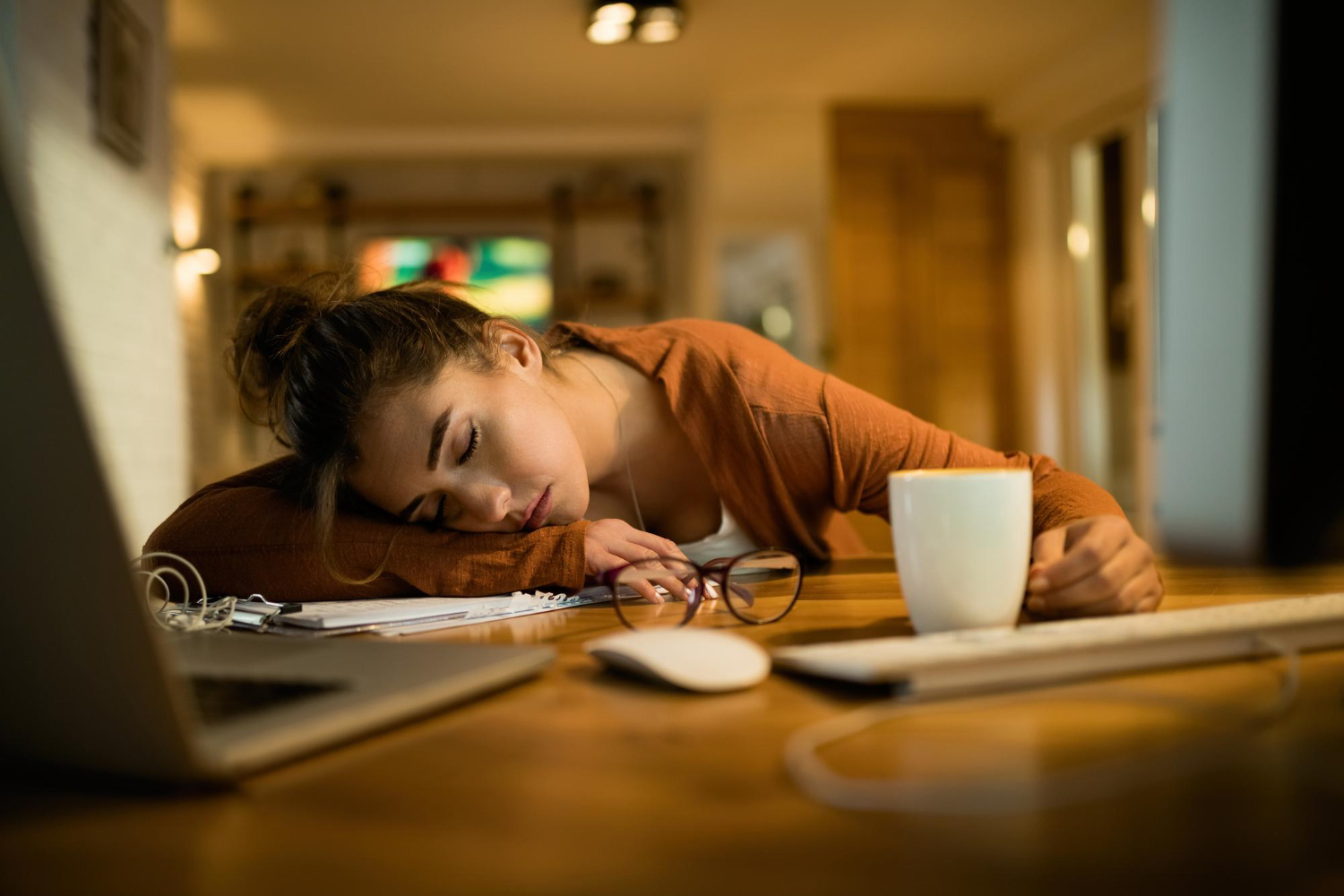
This is one reason the pattern can feel unfair. You may still be behind on sleep overall, but your immediate pressure to fall asleep has been partially relieved. Sleep need and sleep timing are related, but they are not identical. You can be sleep-deprived in a broad sense and still struggle to fall asleep at a specific moment if your timing, light exposure, stimulation, and recent nap history are working against you.
Evening naps are especially disruptive because they happen close to bedtime. A nap at 1:00 p.m. gives your body many hours to rebuild sleep pressure before night. A nap at 8:00 p.m. may not. The later the nap and the longer it lasts, the more likely it is to blur the boundary between evening relaxation and the start of nighttime sleep.
For a deeper explanation of this mechanism, read Sleep Pressure and Adenosine: Why You Get Sleepier the Longer You’re Awake.
Why waking up after the nap can create a second wind
After an accidental evening nap, many people expect to wake up groggy and then go straight to bed. Sometimes that happens. But often the opposite occurs: you wake up, feel disoriented for a few minutes, then become strangely alert. This is the second part of the problem.
Waking itself is activating. You open your eyes, reorient to the room, remember what still needs to be done, and start making decisions again. If you slept on the couch, you also have to physically move from one state to another. You may stand up, turn on lights, put dishes away, change clothes, wash your face, brush your teeth, scroll your phone, or check the time. Each step adds a little more wakefulness.
This can create a “second wind,” especially if the nap reduced the strongest part of your sleep pressure. You no longer have the same biological heaviness you had after dinner, and now your environment is giving you fresh alerting signals. Bright bathroom lights, overhead kitchen lights, phone screens, and mentally engaging tasks all make it easier for the brain to interpret the moment as awake time rather than sleep time.

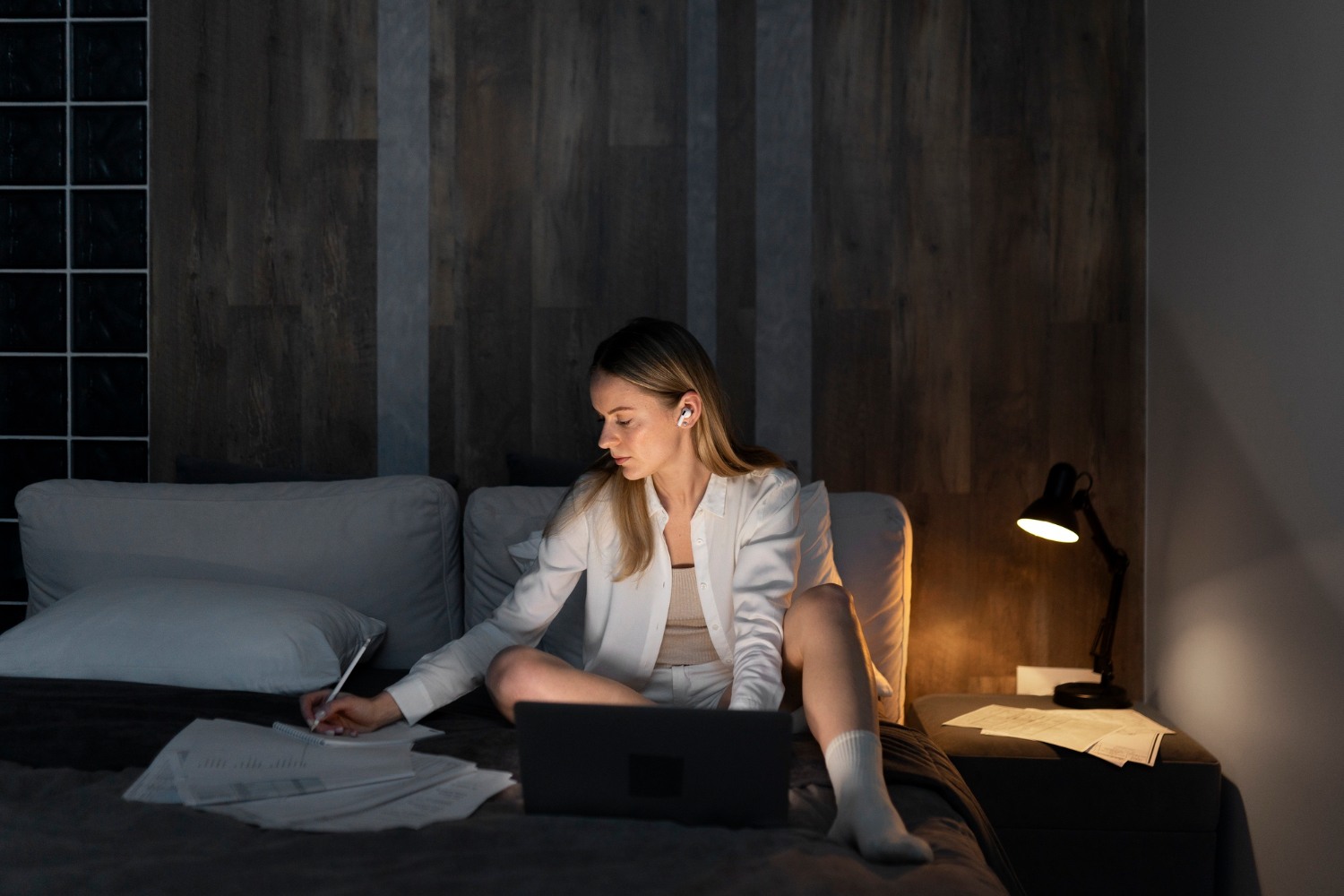
There is also a psychological layer. Once you realize you fell asleep accidentally, you may start calculating the damage. “Now I won’t be able to sleep.” “I just ruined my night.” “I need to get to bed immediately.” That pressure can make the transition feel more fragile. You are no longer simply getting sleepy; you are trying to force sleep to happen on command.
This is why the same person can fall asleep easily on the couch but struggle in bed. The couch sleep happened when sleep pressure, low stimulation, and comfort converged naturally. Bedtime happens later, after that state has been interrupted.
This pattern is closely related to a broader sleep problem: being tired earlier in the evening but wired at bedtime. For the more general version of that issue, read Why Am I Sleepy at 8 PM but Wide Awake at Bedtime?.
Why this is different from a normal short nap
A normal short nap is usually intentional, earlier, and contained. You decide to nap, keep it brief, and place it far enough from bedtime that it does not steal too much pressure from the night. An accidental post-dinner nap is different because it often happens at the edge of your real sleep window.
The timing changes everything. A 15-minute nap in the early afternoon may improve alertness without meaningfully disrupting nighttime sleep. A 45-minute nap after dinner may land inside the biological runway toward bedtime. Instead of being a separate recovery break, it becomes an early fragment of the night.
The setting is different too. A planned nap is usually followed by a return to daytime activity. A post-dinner nap is often followed by an awkward in-between state. It is too late to fully restart the day, but too early or too disrupted to continue smoothly into bed. You wake up in a gray zone: part evening, part night, part unfinished routine.
There is also the issue of sleep stage timing. If the nap is long enough, you may enter deeper sleep and wake during a heavier stage. That can produce sleep inertia, the groggy, foggy feeling that happens when you wake from sleep before your brain has fully transitioned back to alertness. Some people respond to that grogginess by turning on brighter lights, splashing water on their face, checking their phone, or moving around more, which can push them further away from sleep.
This is why “just take a nap” is not always helpful advice for this specific pattern. The question is not whether naps are good or bad in general. The question is whether this particular nap is happening so close to bedtime that it splits the night and makes the main sleep period harder to enter.
How light, screens, chores, and bathroom routines make it worse
The period after the accidental nap often determines whether the rest of the night can recover. If you wake up on the couch and keep the environment dim, calm, and sleep-directed, you may be able to move to bed without much trouble. But if you wake up and restart the evening under bright light and stimulation, the pattern becomes much more likely to repeat.

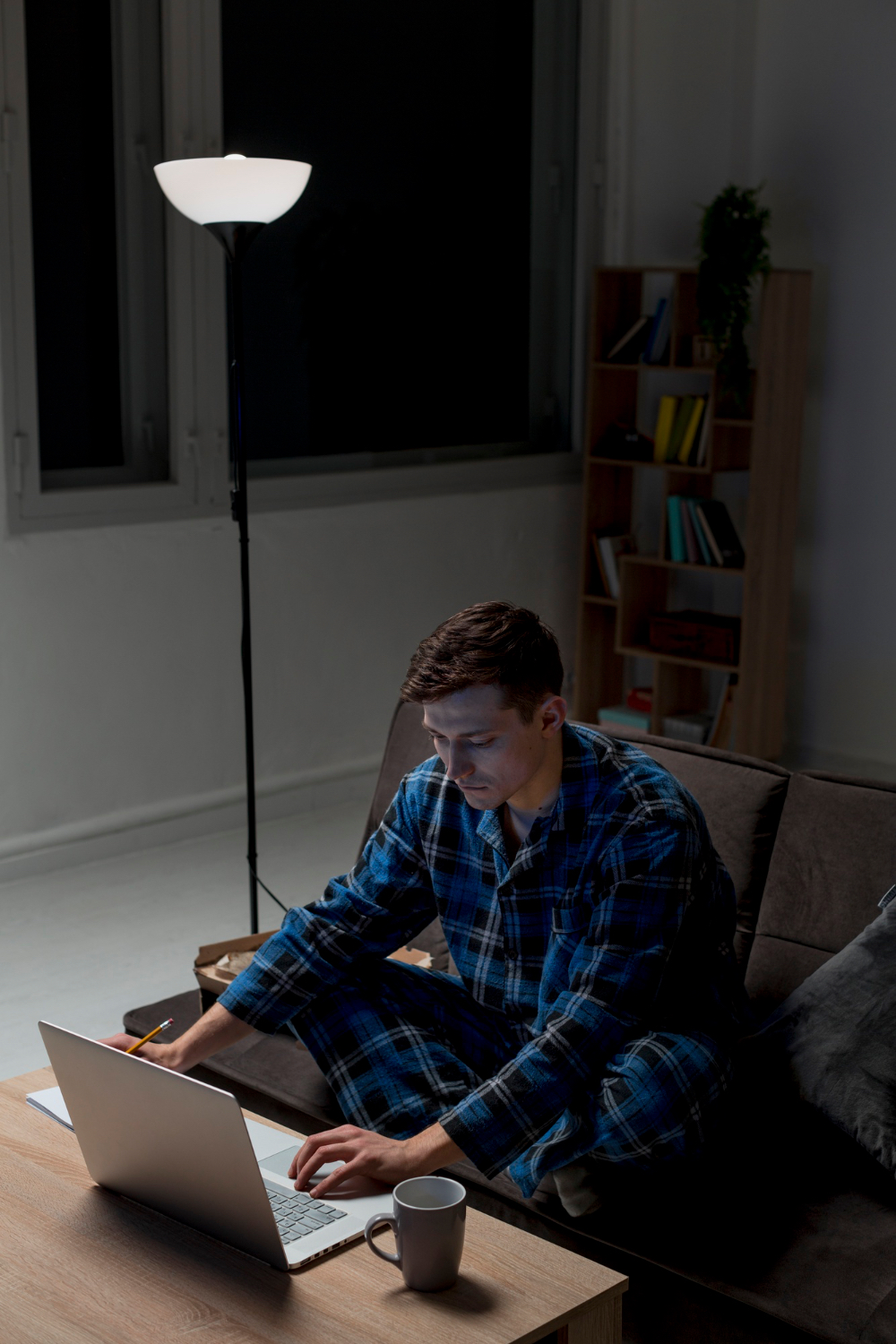
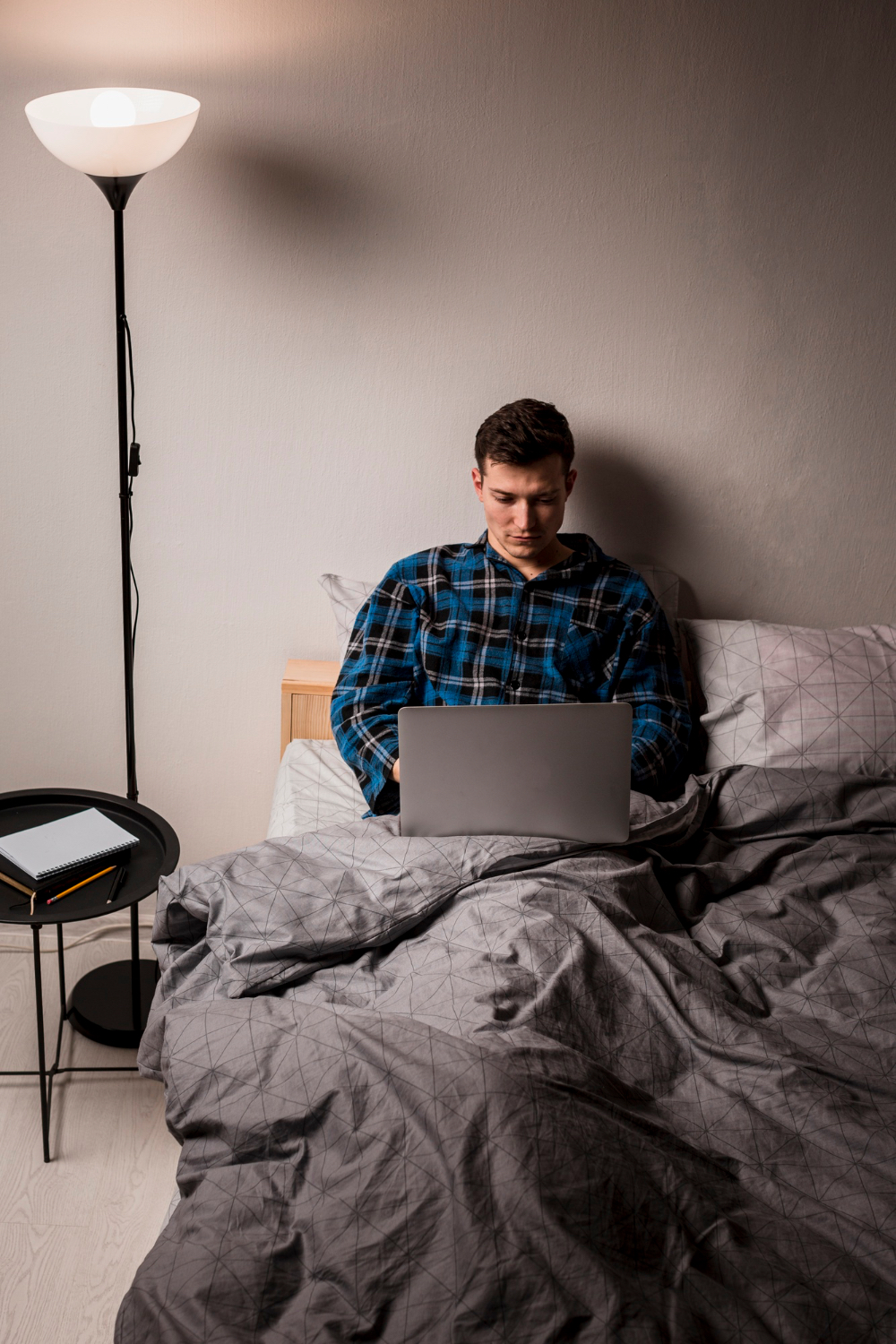
Light is one of the strongest signals your brain uses to understand time of day. In the evening, dimmer light helps the body transition toward night. Bright light, especially close to the face or from overhead sources, can make the brain more alert and can interfere with the normal rise of melatonin, the hormone that helps signal biological night. Screens can add both light and mental stimulation, especially if you check messages, news, work, social media, or anything emotionally engaging.
Bathroom routines can also be more alerting than people realize. Brushing your teeth under bright vanity lights, washing your face with cold water, reorganizing the bathroom, or staring into a bright mirror can all become wake-up cues. None of these actions are “bad.” The issue is the timing and intensity. After an evening nap, your system is already in a delicate transition. A bright, active routine can push it further into wakefulness.
Chores can have the same effect. Cleaning the kitchen, folding laundry, taking out trash, packing a bag, setting up coffee, or preparing for the next day may seem small, but they ask your brain to plan and execute. That is not always compatible with returning quickly to sleep. The task itself may be simple, but the state it creates is more awake.
This is one of the most practical places to intervene. You do not need to make your whole evening perfect. You need to notice that after a post-dinner nap, your body is easy to steer in either direction. Dim, boring, and sleep-directed cues make it easier to continue into the night. Bright, interactive, and task-heavy cues make it easier to create a second evening.
For more on this part of the pattern, read How Screens Delay Sleep Onset and Darkness Cues: How Your Brain Knows It’s Bedtime.
What to do instead when you get sleepy after dinner
The best response depends on whether it is actually bedtime. If you get sleepy after dinner and it is close enough to the time you want to sleep, the simplest solution may be to let the night begin on purpose. Do the minimum necessary routine, keep lights low, avoid restarting tasks, and get into bed before the couch becomes the first sleep location.
This is not the same as forcing yourself to sleep early every night. It means recognizing when your body is already moving toward sleep and not accidentally interrupting that transition. If you are sleepy at 9:30 and your normal bedtime is 10:00, it may be better to protect that sleepiness than to push through another hour of light, screens, and chores.
If it is too early to go to bed, the goal is not to make yourself intensely alert. The goal is to avoid drifting into a nap while still keeping the evening gentle. A useful middle ground might include standing up, clearing the table, taking a slow walk around the room, sitting in a chair instead of lying on the couch, or doing something calm with enough engagement to keep you awake. You are trying to stay in the evening, not restart the day.
The couch is often the key trigger. Lying down after dinner sends a strong signal, especially when you are warm, fed, dimly lit, and tired. If this pattern happens often, treat the couch as a risky place during the first sleepy wave after dinner. Sit upright for a while, or move to a less sleep-inducing spot until you are ready to begin your actual bedtime routine.

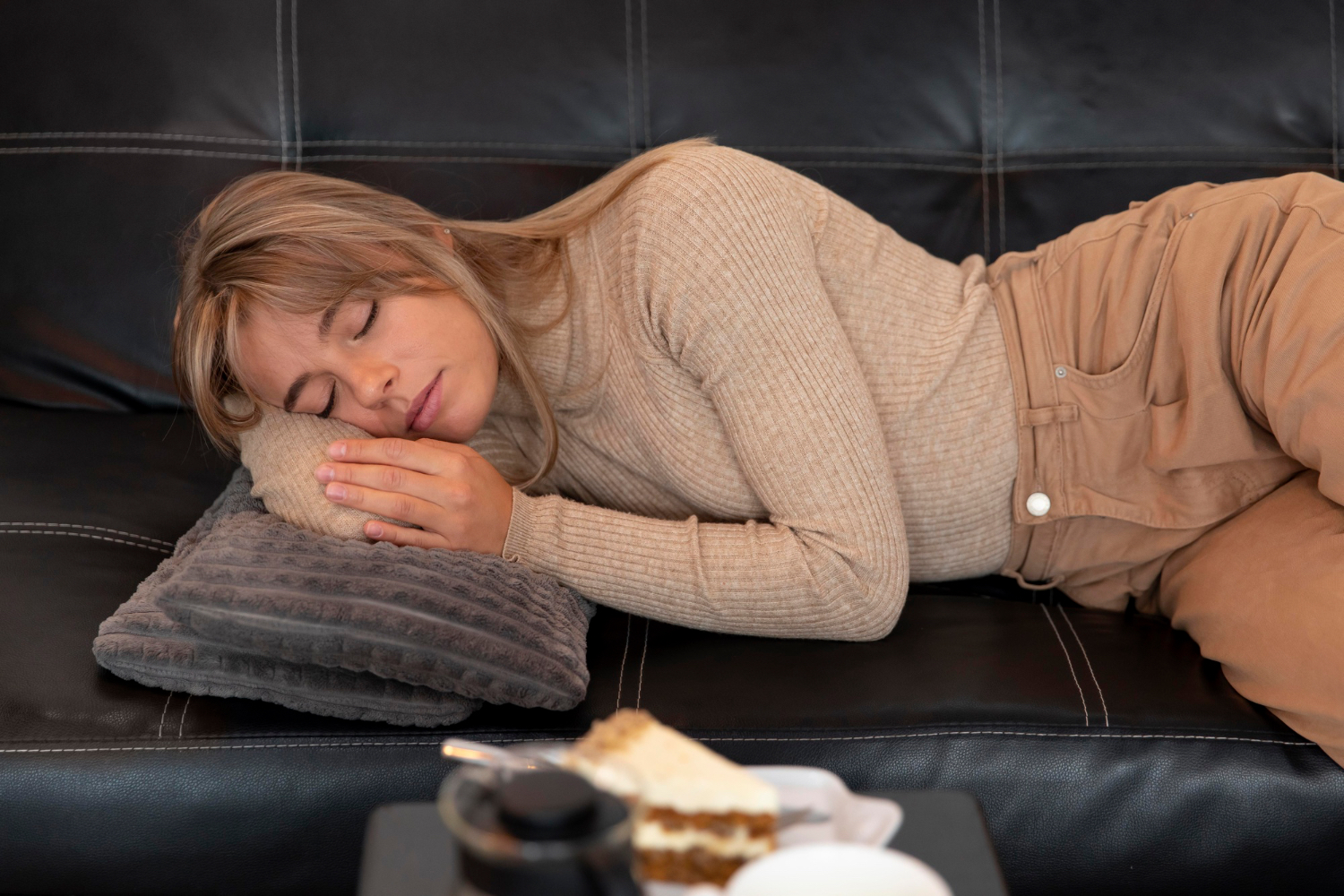
It can also help to move the most alerting parts of your evening earlier. If brushing your teeth, cleaning the kitchen, preparing clothes, or packing for the next day tends to wake you up after a nap, do those tasks before you sit down to relax. That way, if sleepiness arrives, there is less friction between where you are and going to bed.
A simple experiment is to create a “no accidental nap” window between dinner and bedtime for one week. This does not need to be strict or complicated. The idea is to notice the first wave of post-dinner sleepiness and decide deliberately: either start bedtime now, or stay gently upright until bedtime. What you are trying to avoid is the in-between state where you sleep unintentionally, wake up, reactivate, and then struggle later.
If caffeine is part of your evening alertness, timing matters too. Caffeine taken too late in the day can make the post-nap second wind stronger or make it harder for sleep pressure to feel effective again. For that part of the pattern, read When to Stop Drinking Caffeine for Better Sleep.
When to take the pattern more seriously
For many people, falling asleep after dinner and struggling later is a timing and routine issue. It may happen after a short night, a heavy meal, a stressful day, or an evening where the couch became the first sleep location. In that case, the most useful response is usually to adjust the evening sequence and protect the transition into bed.
It is worth paying closer attention if the pattern is frequent, severe, or clearly affecting your daytime life. If you are regularly unable to stay awake after dinner despite getting enough time in bed, or if you feel persistently exhausted during the day, there may be more going on than evening timing. This article cannot tell you whether one of those factors applies, but ongoing fatigue is worth taking seriously.
The point is not to make this pattern feel alarming. It is to notice whether it happens once in a while after a heavy meal or short night, or whether it has become a regular cycle that is starting to affect your sleep and daytime energy.
The bigger pattern: your evening sequence matters
The main lesson is that bedtime does not begin only when you get into bed. Your body is already being guided by the sequence of events that happens after dinner: the meal, the lighting, the couch, the screen, the chores, the bathroom routine, and the timing of your first sleepiness. When those signals line up well, the evening gradually narrows into sleep. When they conflict, the night can split.
Falling asleep after dinner and then being awake at bedtime is a perfect example of how sleep is shaped by timing, not just intention. You intended to sleep later. Your body started sleeping earlier. Then your environment told it to wake up again. By the time you wanted sleep to happen “for real,” the conditions had changed.
The better solution is not to fight your body at bedtime. It is to make the evening sequence more coherent. If sleepiness after dinner means bedtime is close, let the transition continue. If bedtime is still too far away, stay gently awake without flooding yourself with bright light or stimulation. And if you do accidentally nap, treat the wake-up as a fragile moment: keep it dim, quiet, and directed toward bed.
Better sleep is rarely shaped by one isolated trick at bedtime. It usually comes from a daily pattern that gives your body clearer signals at the right times.
Bottom line
If you fall asleep after dinner and then cannot sleep at bedtime, you may be spending part of your sleep pressure too early and then reactivating your body afterward. Dinner may make you drowsy, but the bigger problem is often the accidental early-evening nap plus the lights, screens, chores, and routines that happen after you wake up.
The goal is to keep your night from splitting. When post-dinner sleepiness arrives, either let it become bedtime on purpose or stay gently upright until your real bedtime. What you want to avoid is falling asleep unintentionally, waking up into a bright and active second evening, and then expecting your body to fall asleep again immediately.
Next up
For a closely related pattern, read Why Am I Sleepy at 8 PM but Wide Awake at Bedtime?.
For the biological mechanism behind this issue, read Sleep Pressure and Adenosine: Why You Get Sleepier the Longer You’re Awake.
For the broader daily structure behind better sleep, read What a Daily Plan for Better Sleep Actually Includes.