

Why Do I Feel Worse After Going Back to Sleep in the Morning?
A clear explanation of why extra sleep after waking naturally can sometimes leave you groggier, heavier, or more tired than getting up the first time.

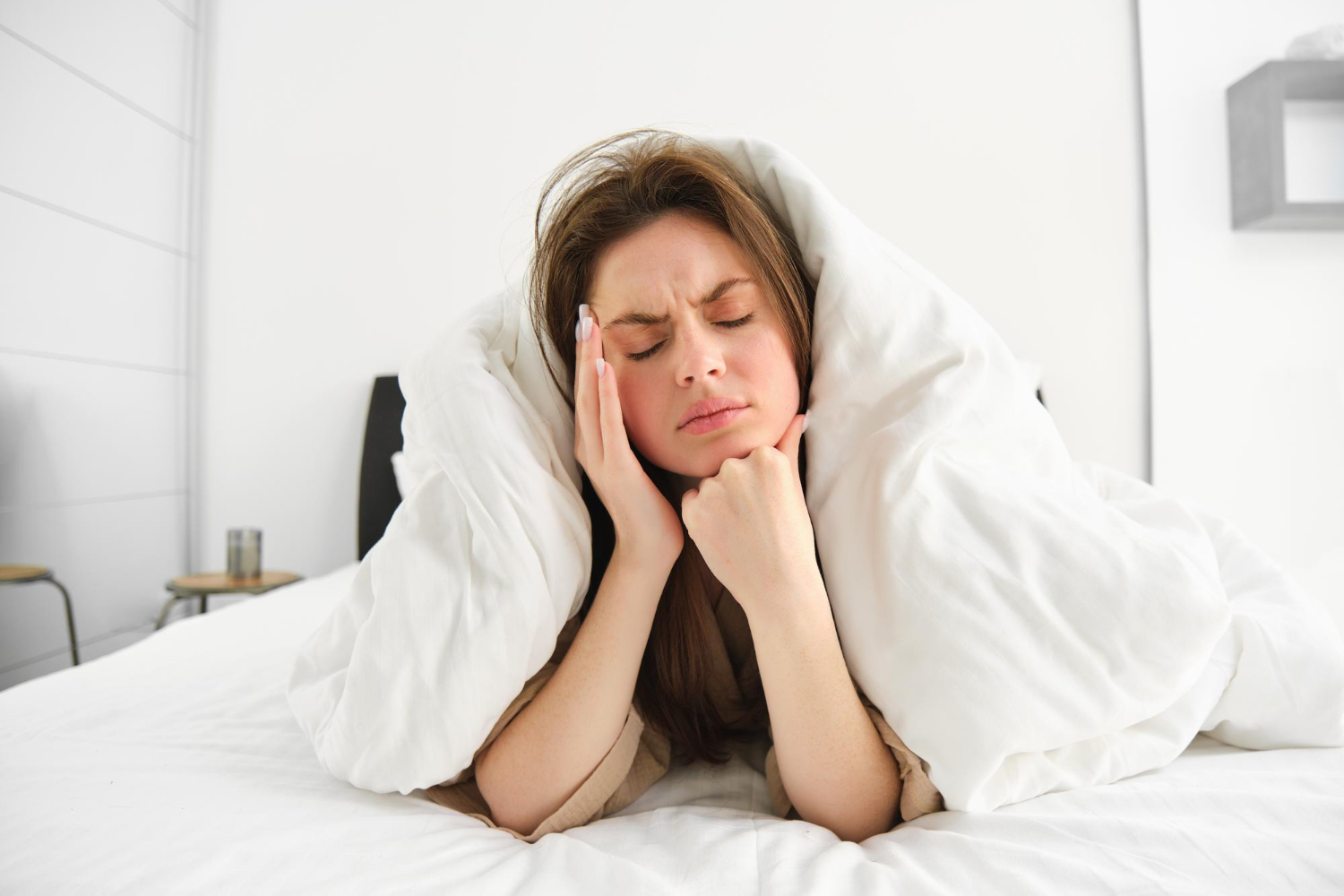
You wake up before your alarm and, for a moment, you feel surprisingly okay. Maybe even clear. The room is quiet, your body feels ready, and part of you thinks you could get up.
Then you look at the time.
You still have 30, 45, or 90 minutes before you need to start the day, so you decide to go back to sleep. It seems like the obvious choice. More sleep should mean more rest. But when you wake up later, you feel worse: heavier, foggier, slower, more irritated, or more exhausted than you did the first time.
If going back to sleep makes you feel worse, it usually does not mean that sleep is bad or that your body somehow “overslept” in a simple sense. More often, the issue is that the extra sleep changed the state you woke from. You may have woken naturally the first time during a lighter transition out of sleep, then gone back under and woken later from deeper sleep, stronger sleep inertia, a poorly timed alarm, or a more disrupted morning rhythm.
The important question is not only, “How many hours did I sleep?” It is also, “When did my body wake up, what state was I in, and what happened after that?”
The short answer
You may feel worse after going back to sleep because your first wake-up happened at a more favorable point in your sleep. When you woke naturally, your brain and body may have already been moving toward wakefulness. If you then went back to sleep, you may have re-entered a sleep stage that was harder to wake from.
That second wake-up can feel worse because of sleep inertia: the heavy, foggy transition period between sleep and full alertness. Sleep inertia is not just “being lazy” or “not wanting to get up.” It is a real state where your brain has not fully shifted into waking function yet. It can feel like pressure behind the eyes, mental slowness, low motivation, poor mood, clumsiness, or a strange sense that your body is awake but your brain is still somewhere else.
This is why extra sleep does not always feel better immediately. Sometimes it helps you recover. Other times, especially when it is short, fragmented, alarm-interrupted, or poorly timed, it can leave you waking from a worse state than the one you were in before.
Why waking naturally can feel better than waking later


A natural morning wake-up often happens when your body is already close to waking. Sleep becomes lighter toward the later part of the night, your circadian system starts preparing for daytime, and your brain may move through brief awakenings between sleep stages. Many of these awakenings are so short that you do not remember them, but sometimes you become aware of one.
If that first wake-up happens near your normal wake time, it may not be random. Your body may be saying, in effect, “This is a reasonable time to come online.” Your sleep pressure has dropped compared with bedtime, your circadian rhythm may be shifting toward alertness, and you may have surfaced from a lighter stage of sleep.
That does not mean you must always get up the moment you wake naturally. But it does help explain why the first wake-up can feel cleaner than the second one. You may have caught your body during a natural transition point. Going back to sleep can move you out of that transition and into another sleep cycle that may not line up neatly with your alarm.
This is especially common when you wake 5 to 30 minutes before your alarm, feel decent, and then try to squeeze in “just a little more sleep.” That extra sleep may not be long enough to complete a useful cycle, but it may be long enough to pull you back into a state that is harder to wake from.
How going back to sleep can restart sleep inertia
Sleep inertia is the groggy period after waking. It can happen after any sleep, but it is often stronger when you wake from deeper sleep, when you are sleep deprived, when your schedule is irregular, or when you wake at a biologically unfavorable time.
Going back to sleep in the morning can restart that transition. The first time you woke up, you may have already passed through some of the inertia and started becoming alert. Then you returned to sleep. When the alarm goes off later, your body has to make the sleep-to-wake transition again.
In a perfect version of sleeping in, that second sleep period would be long enough, smooth enough, and timed well enough that you wake feeling better. But in real life, it often is not. You may drift in and out of sleep, wake repeatedly, hit snooze, dream intensely, or get startled awake by an alarm. Instead of adding one clean block of restorative sleep, you add a messy transition zone between sleep and wake.
That transition zone can make the morning feel worse than if you had either gotten up the first time or gone back to sleep for a longer, more complete period.
Why “just 10 more minutes” can make you feel worse


Short morning sleep can feel tempting because it seems harmless. Ten more minutes, five more minutes, one more snooze. But short sleep after a natural wake-up often creates a problem: it gives your body enough time to start falling asleep again, but not enough time to benefit from a full, stable sleep period.
This is one reason snoozing can feel so punishing. If your alarm rings every 5 to 10 minutes, your brain never gets a clean return to sleep and never gets a clean start to the day. You are repeatedly pulled across the border between sleep and wake. Each alarm can leave you more frustrated, more disoriented, and less willing to get up.
Endless snoozing can also train a strange morning rhythm. Instead of “alarm means the day starts,” the alarm becomes background noise inside a half-asleep state. You may spend an hour or two in bed, technically “sleeping more,” but much of that time is broken, shallow, annoyed, and interrupted. It is not the same as choosing a later wake time and actually sleeping until then.
If you regularly snooze for a long time and feel worse afterward, the issue may not be that you got too much sleep. It may be that you spent too much of the morning in fragmented sleep inertia.
The timing of the first wake-up matters
Not every “I woke up and went back to sleep” pattern means the same thing. The timing changes the interpretation.
If you wake up naturally 5 or 10 minutes before your normal wake time and feel okay, your body may be close to ready. Going back to sleep for a short stretch may simply put you in a worse wake-up state. In that case, getting up the first time may feel better, especially if you have already slept enough.
A related version of this happens when you wake up at your normal wake time, but happen to have an extra 30 or 60 minutes available. You may think, reasonably, “I should use this chance to catch up on sleep.” But if your body had already reached its usual wake-up point, that extra sleep may begin a new sleep period that you then have to cut short with an alarm. In that case, the problem is not that you were wrong to want more sleep. It is that you woke naturally at a good exit point, went back into sleep, and then forced a second wake-up before your body was ready to surface again.
If you wake up 45 to 90 minutes before your alarm, the answer is less obvious. You may be able to go back to sleep and benefit from it, especially if you are short on sleep. But if you set an alarm for an awkward point in the next cycle, you may wake from deeper sleep and feel worse at first. That does not mean the extra sleep was useless. It may only mean the wake-up was poorly timed.
If you wake up in the middle of the night, feel oddly alert for a moment, then sleep several more hours and wake groggy later, that is a different pattern again. Brief awakenings during the night are normal. Sleep is not one unbroken block where consciousness disappears for eight hours. You naturally cycle through lighter and deeper stages, and you may come close to waking between cycles.
In that middle-of-the-night case, it is easy to misread the experience. You might think, “I felt better after four hours than I did after eight, so maybe I only need four hours.” Usually, that is not the right conclusion. You may have had a brief alert moment during a normal nighttime awakening, but that does not mean your body was fully restored. The grogginess later may be from sleep inertia, poor timing, disrupted sleep, an alarm, or other factors, not proof that the extra sleep was harmful.


Why extra sleep is not always the same as better sleep
It is natural to think about sleep in terms of total hours. If six hours is not enough, seven should be better. If seven is good, eight should be better. And if you wake up tired, more sleep seems like the obvious solution.
Sometimes that is true. If you are sleep deprived, sick, stressed, training hard, mentally overloaded, or recovering from several short nights, your body may need more sleep. In that case, sleeping longer can be helpful and appropriate.
But the way sleep feels in the morning is not determined by hours alone. It is also shaped by sleep quality, sleep stage, circadian timing, prior sleep debt, light exposure, alarm timing, caffeine, alcohol, meals, stress, temperature, and how abruptly you are pulled awake.
That is why two mornings with the same total sleep time can feel completely different. Eight hours that end with a natural wake-up can feel better than eight and a half hours that end with a jarring alarm from deep sleep. A clean 30-minute return to sleep may feel better than 90 minutes of snoozing. A later wake-up may feel restorative on one day and heavy on another.
The extra sleep is not automatically bad. It is just not automatically better in the moment.
Sleeping in versus recovering from sleep debt
There is an important difference between sleeping in because your body needs recovery and drifting in and out of bed because the morning has become fragmented.
If you have had several short nights, your body may sleep longer because it is trying to repay sleep debt. You may wake up, realize you are still tired, go back to sleep, and genuinely need that extra time. You might still feel groggy when you finally wake, especially if you wake from a deep stage, but that does not mean the extra sleep was a mistake. Recovery sleep does not always feel instantly crisp.
On the other hand, if you slept a normal amount, woke naturally near your usual wake time, felt reasonably alert, and then went back to sleep out of habit, avoidance, or because the bed felt comfortable, the extra sleep may not add much. It may simply shift you into a groggier wake-up.
This distinction matters because the solution is not always “never go back to sleep.” Sometimes you need more sleep. Sometimes you need a cleaner wake-up. Sometimes you need a more consistent schedule. Sometimes you need to stop turning the last hour of the morning into repeated alarms and half-sleep.
The goal is not to be strict for the sake of being strict. The goal is to notice which pattern you are actually in.
Can you actually oversleep?
The word “oversleep” can mean two different things.
Sometimes it simply means you slept past the time you intended to wake up. In that sense, yes, you can oversleep. You can miss an alarm, wake up late, and feel thrown off because the day started later than planned.
But people often use “oversleep” in a second way, as if sleep works like food: you can consume too much of it, and the extra amount is automatically bad for you. That idea is less useful.
Sleep is not exactly like eating past fullness. If your body sleeps longer than usual, there is usually a reason. You may be carrying sleep debt. Your previous sleep may have been poor quality. You may be recovering from illness, stress, travel, training, emotional strain, or a demanding week. Your schedule may be shifted later. Medication, alcohol, depression, inflammation, or other health factors can also change sleep duration and how rested you feel.
This does not mean very long sleep should be ignored if it is persistent or unusual for you. It can be a clue that something in your health, schedule, or recovery state deserves attention. But the answer is not automatically to force yourself to sleep less because a population average says adults usually need a certain number of hours.
Your body has its own sleep need. Cutting sleep short because you are afraid of “too much sleep” can make the underlying problem worse if what you actually need is recovery or better sleep quality.
The more precise point is this: you may not be harmed by the extra sleep itself, but you may feel worse because of when and how you woke from it. Sometimes the problem is not “too much sleep.” It is a poorly timed wake-up, fragmented snoozing, or a morning rhythm that never gets a clear start.
What if you drink coffee and then go back to sleep?


Another version of this pattern happens when you wake up, drink coffee, and then fall back asleep. Maybe you were trying to do a “coffee nap.” Maybe you got up briefly, felt too tired, and returned to bed. Maybe you drank coffee automatically before realizing you were not ready to start the day.
Caffeine does not work instantly. It takes time to rise in your system, and its effects depend on timing, dose, metabolism, sleep debt, and how long you stay asleep afterward. If you drink coffee and then sleep briefly, you may wake as the caffeine is starting to take effect. For some people, that can feel alerting. For others, especially if the sleep was short or disrupted, it can feel strangely unpleasant: groggy but wired, heavy but restless, awake but not clear.
This can also confuse your morning signals. Your body is trying to move from sleep into wakefulness, but you have added both a return to sleep and a stimulant. That does not mean coffee is always bad in the morning. It means coffee plus a half-finished return to sleep can produce a different state than simply waking, getting light, and starting the day.
If this pattern leaves you feeling zonked out, it may be worth separating the two choices. Either go back to sleep without starting the day, or get up and let caffeine belong to the waking part of the morning.
What to do if you wake up before your alarm
When you wake up before your alarm, the best choice depends on how much time is left, how you feel, and whether you are actually short on sleep.
If you wake up only a few minutes before your alarm and feel reasonably okay, it may be better to get up. You have probably already reached a decent transition point, and returning to sleep may only create a second, harder wake-up.
If you wake up 30 to 90 minutes before your alarm and still feel sleepy, going back to sleep may be reasonable. But it helps to make that choice cleanly. Avoid checking your phone, turning on bright lights, drinking coffee, or mentally starting the day before trying to return to sleep. Those signals can make the next sleep period lighter, stranger, or more fragmented.
If you wake up much earlier than intended and cannot fall back asleep, lying in bed for a while may be fine if you are calm and comfortable. But if you become frustrated, alert, or restless, the problem can shift from “I woke up early” to “I am training my bed to become a place where I struggle.” In that case, it may help to keep the environment dim and quiet and give your body a gentle transition rather than forcing sleep aggressively.
For many people, the most useful experiment is to make the morning wake-up cleaner. The best version is not needing an alarm at all: sleeping early enough, consistently enough, that you naturally wake before you need to start the day. In that sense, an alarm is often sleep restriction by design. It tells your body to wake up at a fixed time whether or not your sleep has finished cleanly. That may be necessary for work, school, parenting, or appointments, but it is still worth recognizing what the alarm is doing. If you do need one, try setting it for the time you actually need to get up, not the time you begin negotiating with yourself. Repeated snoozing often turns the morning into fragmented sleep inertia instead of real extra rest.
A better way to think about the morning


A good morning wake-up is not only about discipline. It is about helping your body complete the transition from sleep to day.
That transition is influenced by what happened before you woke up and what happens immediately after. A clear morning signal can help: getting out of bed, opening the curtains, stepping into brighter light, moving gently, washing your face, or beginning a consistent first routine. These are not magic tricks. They are ways of telling your brain that the sleep period is over and the daytime state has started.
The opposite pattern is less clear. Snoozing repeatedly, scrolling in bed, half-dreaming, turning lights on and off, drinking coffee and lying back down, or repeatedly deciding whether the day has started can leave your body in a mixed state. You are not fully asleep, but you are not fully awake either.
That mixed state is where many people feel the worst.
If this pattern happens often, do not only ask, “Should I get more sleep?” Also ask, “Is my morning giving my body a clear transition, or am I spending the first hour stuck between sleep and wake?”
When long sleep may mean something else is going on
Occasionally feeling worse after going back to sleep is common. It can happen after a late night, a stressful week, a bad alarm, a warm room, alcohol, a disrupted schedule, or simply waking from the wrong sleep stage.
But if you regularly need a very long time in bed, wake unrefreshed, feel heavy for hours, or struggle through the day despite giving yourself enough sleep opportunity, it is worth paying attention. The issue may not be that you are “oversleeping.” It may be that your sleep is not restoring you well, your schedule is misaligned, or something else is increasing your need for recovery.
This article cannot tell you which of those applies. The main point is that cutting sleep shorter is not automatically the answer. If your body is asking for a lot of sleep, that is information. It may mean you need more recovery, better sleep quality, more consistent timing, or a closer look at what is affecting your energy.
The bigger pattern: your body cares about timing, not just hours
Feeling worse after going back to sleep is one of those sleep experiences that seems irrational until you look at the timing. More sleep should feel better, but your body is not only counting minutes. It is moving through sleep stages, circadian signals, sleep pressure, morning light, alarms, habits, and transitions.
You may have woken naturally at a good exit point, then gone back to sleep and woken from a worse one. You may have needed more sleep, but the alarm interrupted it awkwardly. You may have mistaken a normal nighttime awakening for proof that you only needed half a night. You may have spent two hours snoozing and called it “sleeping in,” even though your body experienced it as repeated interruption.
A better question is not, “Is going back to sleep good or bad?”
A better question is, “What kind of extra sleep am I getting, and what state am I waking from?”
If you wake naturally near your normal wake time and feel clear, getting up may be the better choice. If you are truly sleep deprived, extra sleep may be exactly what your body needs. If snoozing makes you feel worse every time, the problem may be the fragmentation, not the desire for more rest.
Sleep works best when your body gets enough of it, at the right time, with a clear transition into the day. That is why better sleep is not only about total hours. It is also about rhythm, structure, and the sequence of signals that help your body know when to sleep and when to wake.
Next up
For a deeper look at the groggy feeling itself, read Why Do I Wake Up Groggy Every Morning?.
For the sleep-stage side of this pattern, read Sleep Cycles: 90 Minutes, Give or Take.
For a broader explanation of why hours alone do not always explain how rested you feel, read What “Good Sleep Quality” Actually Means.