

Why Can’t I Sleep After Leg Day?
Why heavy leg workouts can sometimes make sleep worse, including body temperature, nervous system activation, soreness, recovery demand, fueling, and workout timing.


If you can’t sleep after leg day, the problem is usually not that exercise is bad for sleep. In general, regular movement supports better sleep by increasing sleep pressure, improving mood, helping regulate metabolism, and giving the body a stronger rhythm across the day. But a hard leg day is not just “a workout.” It can be a major whole-body recovery stressor.
Heavy squats, deadlifts, lunges, presses, sprints, or high-volume lower-body training can raise body temperature, activate the nervous system, create muscle soreness, and increase the body’s demand for recovery. If that happens late in the day, after caffeine, during a calorie deficit, or without enough time to cool down and refuel, you may feel physically exhausted but still too activated to sleep.
That mismatch is what makes the pattern so frustrating. Your legs feel tired. Your body feels drained. You may even feel like you “should” sleep deeply because the workout was so hard. But when bedtime arrives, your system may still be dealing with heat, stress hormones, soreness, hunger, restlessness, and repair.
The short answer
You may not be able to sleep after leg day because heavy lower-body training can leave your body in a highly activated recovery state. Your muscles may be tired, but your nervous system, body temperature, circulation, soreness signals, and energy needs may not have settled down yet.
This is especially likely when leg day is intense, late, unusually high in volume, paired with pre-workout caffeine, or followed by under-fueling. In that situation, you may lie in bed with tired legs but a body that is still running warm, alert, uncomfortable, hungry, or restless.
The most useful way to think about it is this: leg day can help your sleep when recovery is supported, but it can disrupt sleep when the training stress is larger than your evening can absorb.
Why leg day can affect sleep more than other workouts
Leg day often involves some of the largest muscle groups in the body: glutes, quads, hamstrings, calves, hip stabilizers, and trunk muscles that help brace during heavy lifts. Compared with a smaller upper-body session, a hard lower-body workout can place a larger demand on the cardiovascular system, connective tissues, nervous system, and energy stores.
That does not mean upper-body workouts cannot affect sleep. They can, especially if they are intense or late. But leg day often combines several sleep-relevant stressors at once. It may involve heavier loads, more bracing, more total muscle mass, higher heart rate, more heat production, and more delayed soreness. It may also leave you more physically uncomfortable when you lie down.
This is why “can’t sleep after leg day” feels different from simply being energized after a workout. It is often not just mental alertness. It can be a combination of heat, muscle repair, soreness, restlessness, appetite, and nervous system activation arriving at the exact time your body is supposed to shift into sleep.
Your body can be tired but still activated
One of the most confusing parts of this pattern is that tiredness and sleep readiness are not the same thing. After a hard leg day, your muscles may be fatigued, but your body may still be physiologically activated. You can feel exhausted without being in the right internal state for sleep.

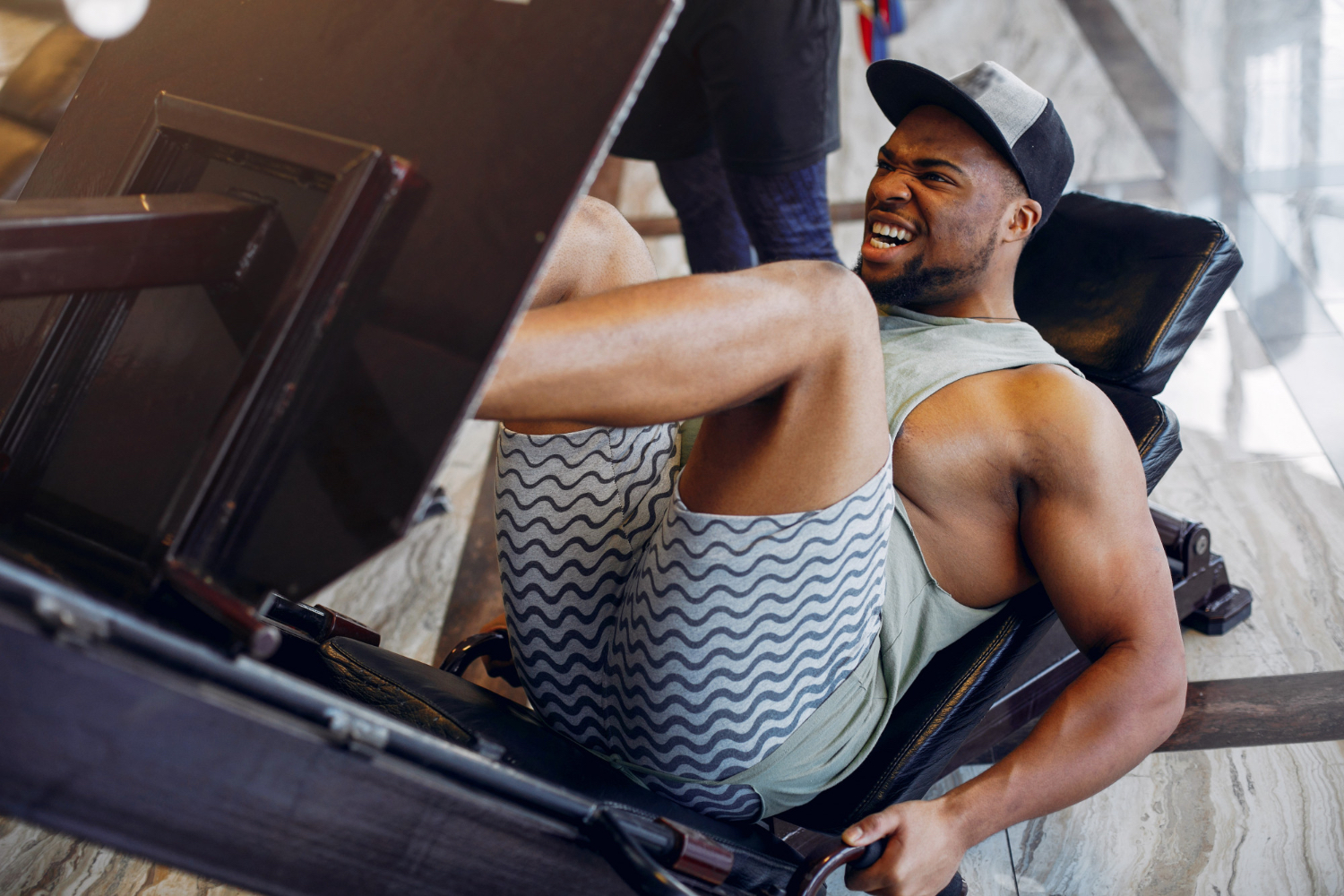
Sleep depends partly on sleep pressure, the gradual buildup of the need to sleep across the day. Exercise can support that pressure by increasing energy use and creating a stronger recovery demand. But sleep also depends on whether your body can downshift. Heart rate, core temperature, stress chemistry, digestion, pain signals, and mental arousal all affect whether that transition happens smoothly.
A hard leg workout can increase the need for recovery while also temporarily increasing the signals that keep you awake. That is the paradox. The same workout that may help you sleep better under the right conditions can make it harder to fall asleep if your body has not had enough time, food, cooling, or calm to transition.
For a deeper look at the buildup of sleep need, read Sleep Pressure and Adenosine: The Build-Up to Bed.
Body temperature can stay elevated after hard training
Sleep usually begins more easily when the body can release heat and gradually cool down. This does not mean you need to feel cold, but the transition into sleep is supported by a drop in core body temperature. Hard exercise can temporarily push in the opposite direction.
Leg day can generate a lot of heat because it uses large muscles and often involves sustained effort. Heavy sets, high-volume training, circuits, intense finishers, and short rest periods can all keep body temperature elevated. Even after the workout ends, your body may still be warm as it restores balance, clears metabolites, repairs tissue, and returns heart rate and circulation toward baseline.
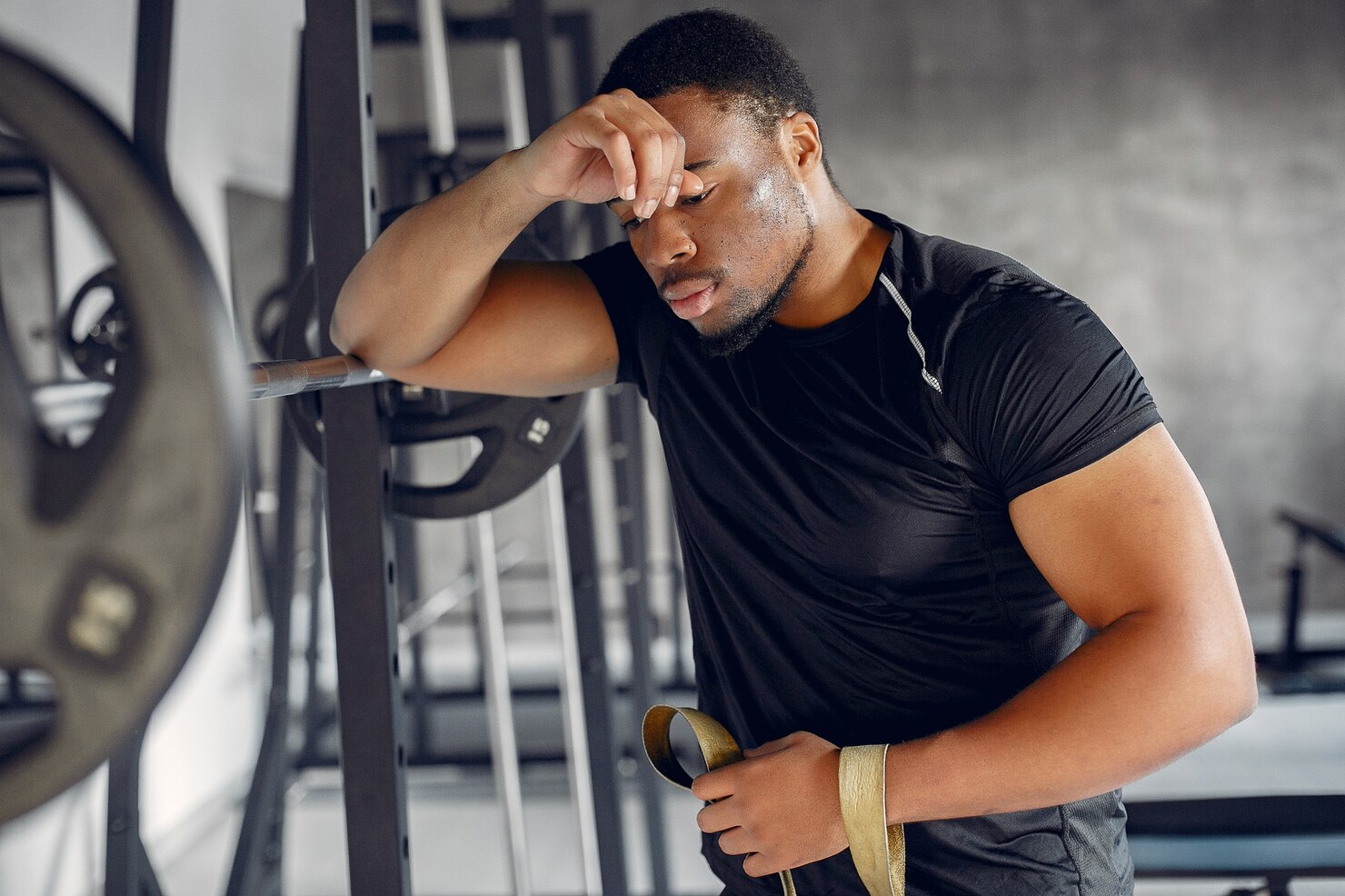
If you train earlier in the day, this usually is not a problem. Your body has time to cool down before bed. But if you train late in the evening, especially close to bedtime, the heat from training may overlap with the time your body is trying to become sleep-ready.
This is one reason some people can exercise at night and sleep fine, while others struggle after a hard evening session. It is not only about the clock time. It is about the intensity of the workout, your fitness level, the room temperature, your cool-down, whether you shower, how late you eat, and how quickly your body returns to a calmer state.
Soreness and restless legs can fragment sleep
Leg day can also make sleep worse because your legs may be uncomfortable when you finally lie still. Muscle soreness, tightness, throbbing, cramping, or a restless feeling can make it harder to fall asleep and easier to wake up during the night.
This is especially common after a workout that was new, unusually intense, eccentric-heavy, or much higher in volume than your body is used to. Exercises that create a lot of muscle lengthening under load, such as Romanian deadlifts, lunges, split squats, deep squats, step-downs, or high-volume calf work, can leave the legs especially sore later.
The issue is not only pain. Even mild discomfort can keep pulling attention back into the body. When you are moving around during the day, soreness may feel manageable. But at night, when the room is quiet and you are trying to be still, every ache, pulse, twitch, or restless sensation can become more noticeable.
This can also fragment sleep after you do fall asleep. You may toss and turn more often, wake up when changing positions, or feel like your legs never fully settled. The next morning, the night may feel lighter and less restorative even if you spent enough time in bed.
Fueling matters more after hard lower-body training
Leg day can be especially demanding from an energy standpoint. If you train hard and then under-eat, delay food too long, or go to bed hungry, your body may have a harder time settling into sleep. The issue is matching the recovery demand of the workout with enough fuel for the night.


Hard training uses muscle glycogen, increases repair needs, and can raise appetite later. If the workout is followed by too little food, your body may interpret the night as a time of unresolved energy demand. Some people feel this as hunger. Others feel wired, restless, hot, or unable to get comfortable.
Carbohydrate intake can be especially relevant for some people after hard lower-body training because intense lifting and high-volume leg work draw on glycogen. If you train hard, eat very little, and then try to sleep, the issue may not be willpower or poor sleep hygiene. Your body may simply be trying to recover without enough available energy.
This does not mean everyone needs a huge late meal after leg day. A very large meal right before bed can also make some people sleep worse because digestion is still active. The more useful question is whether the overall day provided enough energy, protein, fluids, and carbohydrate for the workout you asked your body to recover from.
If this pattern shows up most often when you are cutting calories, training hard, or going to bed hungry, read Why Can’t I Sleep in a Calorie Deficit? for a more specific explanation of that overlap.
Caffeine and pre-workout can make leg day sleep worse
Many people blame leg day itself when the bigger issue is leg day plus stimulants. Pre-workout, coffee, energy drinks, or caffeinated gels can all make a late workout more sleep-disruptive, especially if they are taken in the afternoon or evening.
Caffeine can make the workout feel better by increasing alertness and perceived energy. But the same alertness can remain later, even after the workout is over. Depending on timing and metabolism, caffeine taken before an evening session may still be active when you are trying to sleep.
This matters because heavy leg training already gives the body a strong activation signal. Adding caffeine can make that signal louder and longer-lasting. You may finish the workout feeling satisfied and tired, but your brain and nervous system may still be getting a chemical message to stay alert.
If your sleep is fine after morning or midday leg day but bad after evening leg day with pre-workout, the workout may not be the only variable. The timing of the stimulant may be doing more than it seems.
For a deeper look at that timing problem, read When Should You Stop Drinking Caffeine for Better Sleep?.
Workout timing changes the effect
A hard leg day in the morning, afternoon, or early evening may support better sleep later by increasing sleep pressure and giving your body a strong movement signal during the day. The same workout close to bedtime may create a different result because the recovery response overlaps with the sleep transition.


This does not mean evening workouts are always bad. Many people sleep well after training at night, especially if they are adapted to it, keep the intensity moderate, cool down well, eat enough, and have enough time between the session and bedtime. The problem is more likely when the workout is unusually hard, ends close to bed, or leaves your body feeling hot and wired.
There is also a difference between “I worked out in the evening” and “I finished heavy squats, drank pre-workout, ate late, rushed through a shower, answered messages, and tried to sleep 30 minutes later.” The body does not instantly switch from high-output training to deep sleep. It needs a transition.
That transition is part of why timing matters. The closer hard leg day is to bedtime, the more important the recovery bridge becomes: cooling down, lowering stimulation, refueling enough, and giving your body time to settle.
Read When Is the Best Time to Exercise for Better Sleep? for a broader explanation of how workout timing affects sleep.
Why you may feel restless instead of sleepy
Some people do not describe this as insomnia exactly. They describe it as restless legs, buzzing legs, twitchy legs, or a feeling that their lower body cannot relax. They may feel like they need to stretch, move, change positions, or keep flexing their legs even though they are tired.
After a hard leg day, this can happen for several reasons. The muscles may be sore or irritated. The nervous system may still be activated. Circulation may still feel heightened. The legs may be recovering from a level of training stress they are not fully adapted to yet. If the workout was late, caffeinated, under-fueled, or followed by dehydration, the restless feeling may be stronger.
It is important not to over-diagnose every restless sensation after a workout. Occasional leg restlessness after hard training can be a normal recovery signal. But if the sensation is frequent, severe, unrelated to training, or clearly disrupting your life, it is worth taking seriously beyond normal workout recovery.
For the common leg-day version, the practical question is simpler: did the workout create more activation, soreness, heat, or recovery demand than your evening routine could resolve before bed?
What to try if leg day keeps ruining your sleep
The best fix depends on which part of the pattern is driving the problem. Instead of changing everything at once, choose the most likely issue and stay with that adjustment long enough to notice whether it helps.
If leg day is late, try moving the hardest lower-body session earlier. You may not need to move all exercise away from the evening, but heavy squats, deadlifts, high-volume leg presses, sprint work, or brutal finishers may be easier to recover from when they are not right before bed.
If you use pre-workout, test leg day without caffeine or move the caffeine earlier. This is especially worth trying if you feel alert, mentally wired, or unable to feel sleepy even though your legs are exhausted.
If you feel hot at night, give cooling more attention. A longer cool-down, a lukewarm shower, lighter bedding, a cooler room, and enough time between training and bed may help your body move out of the workout state.
If soreness is the main issue, adjust the training stress. The answer may not be to train less forever, but a sudden jump in volume, load, range of motion, eccentric work, or intensity can create more nighttime discomfort than your body is ready to handle. A more gradual progression may support both training and sleep.
If you feel hungry, wired, or restless after hard leg sessions, look at fueling. Make sure the day includes enough total energy and a recovery meal that fits your sleep timing. For some people, a balanced meal after training works well. For others, a lighter evening meal plus a small later snack is easier on digestion.


If your legs feel restless, add a real transition after training. Gentle walking, easy mobility, relaxed breathing, and a calm post-workout routine can help your body stop treating the evening like it is still part of the workout.
These are not generic sleep tips. They are ways to reduce the specific mismatch that happens when leg day creates a large recovery demand too close to bedtime.
When to look beyond normal workout recovery
Occasional poor sleep after an unusually hard leg day is usually not surprising. It is a sign that the workout affected your whole system, not just your legs. But the pattern deserves more attention if it happens after nearly every session, becomes severe, or starts affecting your daytime energy, mood, training progress, or ability to recover.
It is also worth looking beyond normal workout recovery if your legs feel intensely restless even on non-training days, if discomfort is worsening, or if sleep disruption continues even after you adjust timing, caffeine, fueling, and training load. This article cannot tell you whether something else applies, but ongoing or worsening patterns are worth paying attention to.
For most people, though, the useful first step is not to assume something is wrong. It is to notice the pattern clearly. Does it happen only after late leg day? Only after heavy squats or deadlifts? Only when you use pre-workout? Only when you are cutting calories? Only when the workout is much harder than usual?
Those clues usually point toward the adjustment that matters most.
The bigger pattern: movement helps sleep when recovery is supported
Leg day can absolutely be part of better sleep. The issue is not that lower-body training is bad for sleep. The issue is that hard training is a strong signal, and strong signals need to fit the rest of the day.
When leg day is timed well, fueled well, and followed by enough recovery, it can increase sleep pressure and support deeper rest. When it is too late, too intense, under-fueled, overheated, or paired with stimulants, it can leave you tired but unable to settle.
That is the key distinction. Exercise supports sleep best when the workout and the recovery environment work together. Your body needs the training stimulus, but it also needs enough time, food, cooling, and calm to convert that stimulus into repair.
Better sleep after leg day is not about avoiding hard workouts. It is about helping your body finish the day.
Bottom line
If you can’t sleep after leg day, your body may be tired but still activated. Heavy lower-body training can raise body temperature, stimulate the nervous system, create soreness, increase energy demand, and make your legs feel restless at night. The pattern is more likely when the workout is late, unusually intense, caffeinated, under-fueled, or followed by too little time to cool down.
Start with the most obvious mismatch. Move the hardest leg session earlier if you can. Reduce late caffeine. Give yourself a real cool-down. Make sure you are not going to bed under-fueled after a demanding workout. Adjust training volume if soreness is repeatedly fragmenting sleep.
Leg day should challenge your body, but bedtime should help your body recover from that challenge.
Next up
Read Why Do I Sleep Worse on Rest Days? for the opposite movement pattern: why too little movement, light, and daytime stimulation can also make sleep worse.
You may also like A Daily Plan for Better Sleep, which brings together how movement, meals, caffeine, light, and evening timing work across the day.