

Why Can’t I Fall Asleep Even When I’m Tired?
A clear guide to the frustrating gap between feeling exhausted and actually being ready to sleep, and why falling asleep depends on more than tiredness alone.
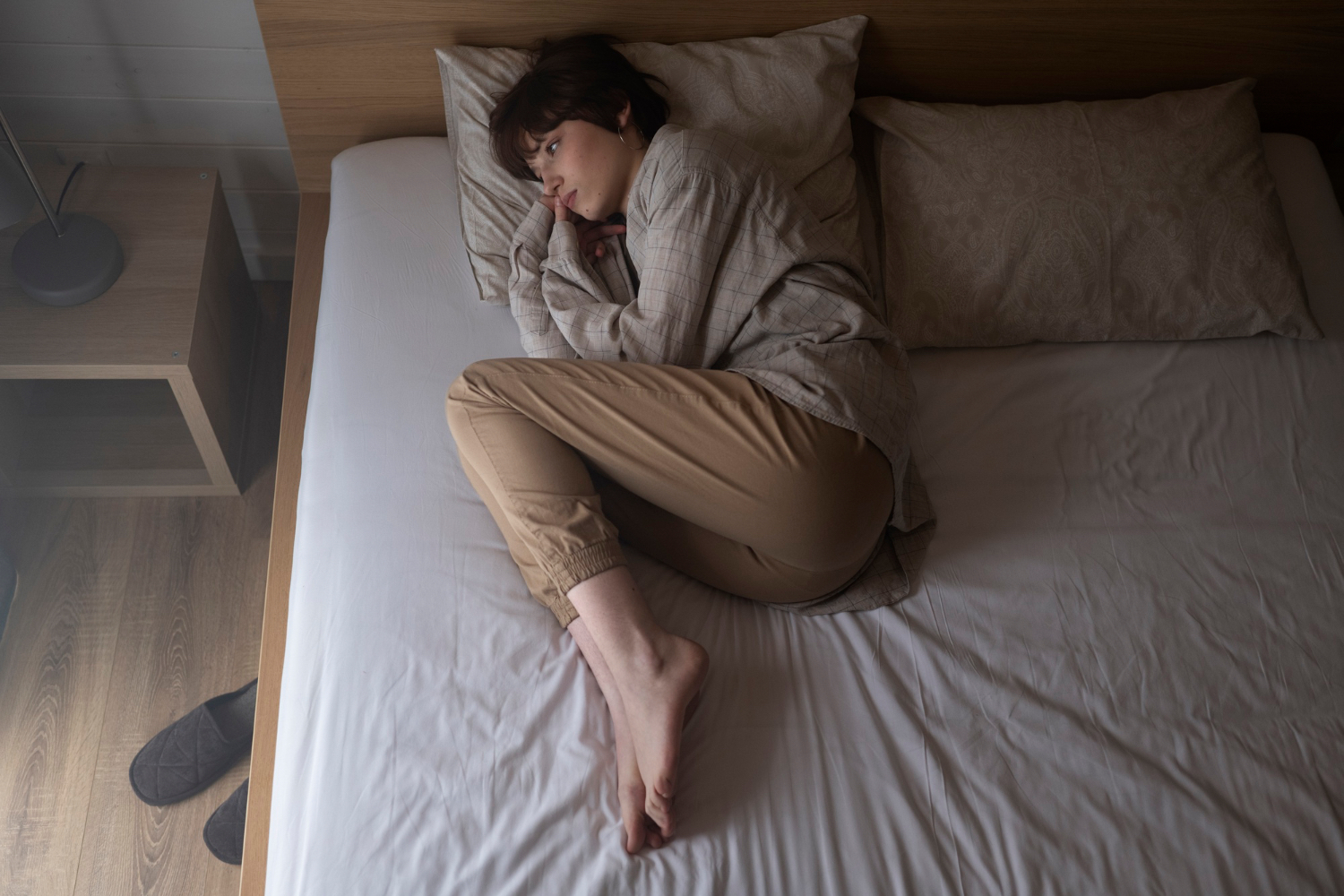
It is one of the most frustrating sleep problems: you feel exhausted, you want to sleep, and you know you need rest, but the moment you get into bed your mind stays awake. Your body may feel heavy, your eyes may feel tired, and your day may clearly be over, yet sleep still does not come.
This can feel confusing because most people assume tiredness should naturally lead to sleep. If you are tired enough, you should fall asleep. If you cannot fall asleep, maybe you are not really tired. But sleep does not work quite that simply.
Feeling tired is not the same as being biologically ready to sleep. Tiredness can come from stress, mental effort, physical exertion, poor recovery, boredom, emotional strain, or a long day. Falling asleep, however, depends on a more specific set of conditions inside the body. Your sleep pressure needs to be high enough, your circadian rhythm needs to be aligned with bedtime, your nervous system needs to be calm enough to let go, and your environment needs to support the transition into sleep.
When those signals line up, sleep can feel natural. When they conflict, you can feel tired but still stay awake.
The difference between being tired and being sleep-ready
The phrase “tired but wired” describes this problem well. You may be physically drained but mentally alert, or emotionally exhausted but unable to relax. Your body wants relief, but your brain is still processing, planning, worrying, reacting, or responding to stimulation from the day.
This does not automatically mean you have insomnia, and it does not mean something is wrong with you. It usually means that tiredness alone is not enough to start sleep. Sleep is a biological transition, and the body needs the right signals before that transition happens smoothly.
A helpful way to understand this is to separate general fatigue from sleep readiness. General fatigue is the feeling that you are low on energy or worn down. Sleep readiness is the state where your brain and body are actually prepared to enter sleep. These two states often overlap, but they are not identical.
You can be fatigued after a stressful day, but if your nervous system is still activated, your body may resist sleep. You can be exhausted after a week of poor sleep, but if you drank caffeine too late, your brain may still receive an artificial alerting signal. You can feel sleepy earlier in the evening, but if bright light, screens, work, or stress push your body clock later, your internal timing may not match the bedtime you want.
That is why the question is not only, “Am I tired?” A better question is, “Is my body getting the right signals for sleep?”
Sleep depends on two major forces
Two of the most important forces behind sleep are sleep pressure and circadian rhythm. They work together, but they are not the same thing.
Sleep pressure is the drive for sleep that builds the longer you are awake. From the time you wake up, your body gradually accumulates pressure to sleep again. This is one reason you usually feel more ready for bed at night than in the morning. Sleep pressure rises during the day and falls during sleep.
Circadian rhythm is your internal body clock. It helps regulate when you feel alert and when you feel sleepy across the 24-hour day. This rhythm is strongly influenced by light, darkness, wake time, meals, activity, and routine. When your circadian rhythm is aligned with your desired bedtime, falling asleep tends to be easier. When it is delayed, disrupted, or inconsistent, your body may still send a wakefulness signal even though you feel tired.
Related: Sleep Pressure and Adenosine: The Build-Up to Bed explains why sleepiness builds across the day, and Why Modern Life Scrambles Your Body Clock breaks down how daily timing cues can push your rhythm later.
The problem is that these two forces can become mismatched. You may have enough fatigue to want sleep, but not enough sleep pressure to fall asleep easily. Or you may have strong sleep pressure, but your circadian rhythm may be telling your brain that it is not yet biological night. In either case, the result can feel the same: you are tired, but you cannot fall asleep.
Why your body can feel tired while your brain stays awake
Many people assume sleep is mainly about the body needing rest. But falling asleep also requires the brain to stop protecting wakefulness. If your nervous system senses stress, uncertainty, stimulation, or pressure, it may keep you alert even when you are physically exhausted.
This is especially common after demanding days. Work stress, emotional conversations, financial worries, social pressure, late-night problem-solving, and constant notifications can all keep the brain in an active state. Even positive stimulation can have this effect. An exciting project, an intense show, a game, a creative idea, or a long scroll through social media can keep the mind engaged long after the body feels ready for bed.
The bed can then become the first quiet moment of the day. As soon as external distractions stop, the mind starts processing everything that was pushed aside earlier. Thoughts become louder, tomorrow’s tasks appear, unresolved problems resurface, and the pressure to fall asleep can make the whole situation feel more urgent.
In that state, trying harder to sleep usually does not help. Sleep responds better to safety, calm, and consistency than to force.
Common reasons you can’t fall asleep even when tired
Usually, this is not happening for just one reason. More often, several signals are working against sleep at the same time. The useful approach is not to blame yourself, but to look at the conditions leading into bedtime and identify which ones may be keeping your body alert.
Your nervous system may still be activated
Stress is one of the most common reasons people cannot fall asleep, even when they are exhausted. This does not always look like panic or obvious anxiety. It can be quieter than that: replaying the day, thinking through conversations, checking tomorrow’s schedule, worrying about work, or feeling pressure because you know you need sleep.
When the nervous system is activated, the body is less willing to let go. Your heart rate may stay higher, your breathing may be shallower, your muscles may remain tense, and your thoughts may keep moving. You may feel tired in one sense, but your body is still acting as if it needs to stay alert.
A useful first step is to create a real transition between your day and your bed. This does not need to be elaborate. It can be as simple as dimming the lights, writing down tomorrow’s tasks, doing a quiet routine, stretching gently, taking a warm shower, or listening to something calm. The point is to give your body a repeated signal that the active part of the day is finished.
Your circadian rhythm may be later than your desired bedtime
Sometimes the issue is not that you are too stressed, but that your internal clock is not ready for sleep yet. This is especially common if you feel tired during the day but more alert at night, get a “second wind” around bedtime, or can fall asleep at 2 a.m. but not at 11 p.m.
Your body clock can drift later when your mornings are dim, your evenings are bright, your wake time moves around, or your weekends shift far later than your weekdays. Bright light at night, especially combined with stimulating work or screen use, can also make the body act as if the day is continuing.
In this case, focusing only on bedtime usually does not solve the problem. Simply getting into bed earlier does not mean your body clock will be ready to sleep earlier. If your rhythm has drifted late, an earlier bedtime often just creates more time lying awake because your biology is still running on a later schedule. The body clock is shaped across the whole day. Morning light helps anchor your rhythm earlier, while dimmer evenings help your body understand that night is approaching. When your rhythm has drifted late, it usually responds better to repeated timing cues than to trying to force sleep earlier in one step.
You may have had caffeine too late
Caffeine can make sleep problems confusing because it can keep you alert even while you still feel tired underneath. It does not create real recovery; it mainly blocks some of the signals that help your brain feel sleep pressure. This means you can feel exhausted and still have enough caffeine activity in your system to delay sleep.
People vary widely in caffeine sensitivity. Some can drink coffee in the afternoon and sleep normally. Others may notice sleep disruption from caffeine much earlier in the day. The effect depends on dose, timing, genetics, stress level, sleep debt, and the total amount consumed across coffee, tea, energy drinks, pre-workout, soda, chocolate, or some medications.
If you often feel tired but cannot fall asleep, caffeine timing is one of the simplest variables to test. Try moving caffeine earlier for one to two weeks and observe what changes. You do not have to decide that caffeine is “bad.” You are simply finding the timing that works for your biology.
Read: When Should You Stop Drinking Caffeine for Better Sleep? for a practical way to test your own caffeine cutoff.
Your evening light may be telling your body it is still daytime
Light is one of the strongest signals for the body clock. Bright light in the morning helps support alertness and circadian alignment. Bright light at night can do the opposite by telling the brain that the day is not fully over.
This matters even when the light does not seem dramatic. Light at night can suppress melatonin, which is one of the signals that helps your body shift toward biological night. And the effect is not always limited to the exact moment the light is on. A brightly lit bathroom, hallway, or kitchen late at night can delay the process for a while afterward, even if your bedroom is fully dark once you get into bed.
This is not only about phone screens. Screens matter, but so do overhead lights, bright bathrooms, kitchens, workspaces, TVs, and LED lighting throughout the home. If your environment stays bright until the moment you get into bed, your body may not receive a strong enough evening signal that it is time to prepare for sleep.
A better evening does not require sitting in darkness for hours. It usually starts with lowering the intensity of the environment. Turn off unnecessary overhead lights, use lamps instead of ceiling lights, reduce screen brightness, shift toward warmer light when possible, and avoid blasting yourself with bright bathroom light right before bed. The goal is to create a gradual transition from day to night.
Related: Darkness Cues: How Your Brain Knows It's Bedtime and How Screens Delay Sleep Onset go deeper on why late light can keep you awake.
You may not have enough sleep pressure at bedtime
Sometimes people feel tired but still do not have enough sleep pressure to fall asleep quickly. This can happen after sleeping in late, taking a long nap, napping too late in the day, spending too much time resting, having a very low-activity day, or trying to force an earlier bedtime than the body is ready for.
This is one reason “just go to bed earlier” often does not work. If your body does not have enough sleep pressure, getting into bed early may simply create more time awake in bed. Over time, that can make bedtime feel frustrating and increase anxiety around sleep.
Building sleep pressure is not about exhausting yourself. It is about giving the day enough structure. A consistent wake time, daylight exposure, movement, limited late naps, and less awake time spent in bed can all help the body build a more predictable drive for sleep by evening.
Related: How to Nap Without Ruining Your Sleep is worth reading if naps are part of why you feel tired during the day but not sleepy at night.
Your bed may have become associated with wakefulness
If you spend many nights lying awake in bed, your brain can start to associate bed with thinking, worrying, scrolling, or trying to sleep. This creates a frustrating loop: you get into bed, worry that you will not sleep, become more alert, stay awake longer, and strengthen the association between bed and wakefulness.
This is one reason it helps to protect the bed as a sleep cue. Ideally, bed should be associated with sleep, rest, and intimacy, not work, email, social media, television, upsetting news, problem-solving, or clock-watching.
If you are awake for a long time and becoming frustrated, it may help to get out of bed briefly and do something quiet in dim light until sleepiness returns. This is not about being strict or punitive. It is about helping your brain relearn that bed is not the place where you struggle.
Your evening may be too stimulating
Not all stimulation feels stressful. Some of it is enjoyable, useful, or even relaxing in the moment. But an intense show, a competitive game, a work session, social media, late-night shopping, analytics, messages, or emotionally charged content can all keep the brain engaged when the body needs to downshift.
Modern evenings are often full of signals designed to hold attention. That can make it difficult for the nervous system to move from activity into sleep. You may feel tired, but the rhythm of the evening is still asking your brain to respond.
A useful wind-down routine does not need to be perfect or precious. It simply needs to be less stimulating than the rest of the day. Reading something light, preparing for tomorrow, stretching, tidying your space, taking a shower, journaling, or listening to calm audio can all help create a slower final chapter before bed.
You may be worried about not sleeping
Sleep anxiety often begins with a real problem. Maybe you had a few bad nights, maybe tomorrow matters, or maybe you have been struggling long enough that bedtime itself now feels tense. The worry then becomes part of the problem.
Thoughts like “I need to fall asleep now,” “I’m going to be ruined tomorrow,” or “Why am I still awake?” increase pressure. The body interprets that pressure as a reason to stay alert. Sleep starts to feel like a performance, and the bedroom becomes a place where you monitor yourself.
The solution is not to pretend you do not care about sleep. Sleep does matter. But in the moment, it often helps to shift the goal from “I must fall asleep immediately” to “I am going to reduce arousal.” Rest quietly, stop checking the clock, keep the room dark and comfortable, and remind yourself that one difficult night does not define your health. The less sleep feels like a test, the easier it often becomes.
Meals, alcohol, and exercise timing can also matter
Sleep is shaped by the whole evening, not just the last few minutes before bed. A heavy meal close to bedtime can keep digestion active. Alcohol may make you feel sleepy at first but can disrupt sleep later in the night. Intense exercise late in the evening can leave some people too activated, even when they are physically tired.
These factors are individual. Some people can exercise at night and sleep well. Some can eat later without much trouble. Others are more sensitive. Rather than applying rigid rules, it is often more useful to watch for patterns in your own sleep.
For one or two weeks, pay attention to when you have dinner, snacks, alcohol, caffeine, intense workouts, screen time, bedtime, and wake time. You are not trying to become obsessive. You are looking for repeated clues. If your sleep is noticeably worse after late meals, alcohol, late caffeine, or intense evening stimulation, your body may be showing you what to adjust.
What to try first


If you are tired but cannot fall asleep, start by strengthening the signals that make sleep easier. You do not need to identify one perfect cause before improving the overall pattern.
Start by making your wake time and bedtime window more consistent. Your body does not need perfection, but it does benefit from predictability. A regular wake time helps anchor your rhythm, and a realistic bedtime window helps your evening routine become more stable.
Next, make the final part of the evening dimmer and calmer. Turn down the intensity of your environment before bed, especially overhead light and stimulating screen use. This helps your body receive a clearer signal that the day is ending.
Then look at caffeine. If you currently drink caffeine in the afternoon, move it earlier for a week or two and see whether falling asleep becomes easier. For sensitive people, even early afternoon may be too late.
It is also worth creating a simple wind-down period. This can be short, but it should feel meaningfully different from the rest of your day. The purpose is not to perform an ideal routine. The purpose is to stop asking your body to move instantly from full-speed life into sleep.
Finally, get bright light earlier in the day when possible. Morning light and dimmer evenings work together. One helps your body feel awake at the right time; the other helps your body prepare for sleep at the right time.
Read: Morning Sunlight vs. Indoor Light: Why It Matters if you want the most practical explanation of what counts as a strong morning light signal.
A simple way to understand the problem
If you cannot fall asleep even when you are tired, ask three questions. Do I have enough sleep pressure? Is my circadian rhythm aligned with this bedtime? Is my nervous system calm enough to let sleep happen?
If the answer to any of those is no, sleep may be difficult. You may still feel exhausted, but your body may not yet be receiving the full set of signals it needs to enter sleep.
This is why better sleep is not only about what happens after you get into bed. Your morning light, caffeine timing, movement, meals, stress, work rhythm, evening environment, and bedtime routine all help tell your body when to be awake and when to sleep.
When it may be worth getting support
Occasional trouble falling asleep is common, especially during stressful periods, travel, schedule changes, or intense seasons of life. But if this is happening often, becoming severe, or clearly affecting your daytime life, it is worth taking seriously.
Sometimes persistent difficulty falling asleep is part of a bigger issue, such as significant anxiety, pain, medication effects, breathing-related sleep problems, restless legs, or another health pattern that needs more than basic sleep-habit changes. Most of the time, sleep difficulty is not an emergency, but a pattern that keeps persisting may need more support than a few routine adjustments.
The bigger lesson
The most important idea is that feeling tired is not the same as being ready to sleep. Sleep happens more easily when your body has enough sleep pressure, your circadian rhythm is aligned, and your evening environment tells your nervous system that it is safe to let go.
That is why one isolated sleep tip rarely solves the whole problem. Better sleep usually comes from a better daily pattern. Your body is always listening to signals: light, timing, movement, meals, caffeine, stress, temperature, and routine. When those signals work together, sleep becomes easier. When they conflict, you can feel exhausted and still stay awake.
The goal is not to force sleep. The goal is to build a day that leads naturally into it.
Next up
Next up in Common Sleep Questions: Why Do I Wake Up Groggy Every Morning? Sleep Inertia, Timing, and Common Causes.