

Why Am I Sleepy at 8 PM but Wide Awake at Bedtime?
A practical guide to why you can feel sleepy early in the evening, push through that window, and then feel strangely alert when you finally try to go to bed, plus what to change so bedtime feels easier.


You feel sleepy on the couch at 8 or 9 PM. Your eyes get heavy, your body starts to slow down, and part of you knows that you could probably fall asleep if you went to bed right then. But you do not. You finish the episode, answer a few messages, clean up the kitchen, brush your teeth, turn on brighter lights, maybe check your phone one more time, and then finally get into bed.
Now you are awake.
Not just a little less sleepy, but strangely alert. Your mind is active. Your body no longer feels ready to sleep. The tiredness that seemed so obvious an hour ago has disappeared, and the bedtime you were aiming for suddenly feels harder than it should.
This can be confusing because it feels backward. If you were sleepy earlier, why are you not sleepy now? Did you miss your chance? Did your body “wake itself back up”? Is something wrong with your sleep?
Often, the answer is simpler and more specific: you may have pushed through an earlier sleep opportunity, then changed the signals around your brain and body in a way that made sleep less likely by the time you actually got into bed. That shift can involve light, timing, sleep pressure, circadian alerting, mental stimulation, and learned bedtime associations.
This article is not about every possible reason someone might feel awake at night. It is about one very specific pattern: feeling sleepy earlier in the evening, then wide awake when you finally try to go to sleep.
The short answer
If you are sleepy at 8 PM but wide awake at bedtime, your body may have given you an earlier sleep signal that you pushed through. By the time you actually went to bed, your sleep pressure, circadian rhythm, light exposure, and mental state may have shifted enough that sleep no longer felt easy.
That does not necessarily mean something is wrong with you. It often means the sequence of your evening is working against you.
You may have been sleepy because several sleep-promoting factors were briefly aligned: you had been awake long enough, your evening light was dim, your body was beginning to release melatonin, your activity level was dropping, and your brain was not yet highly stimulated. Then, before going to bed, you may have changed that state. Bright bathroom lights, phone use, chores, work, news, conversation, planning, or even the simple act of “getting ready for bed” can increase alertness.
The result is a common but frustrating pattern: sleepy on the couch, awake in bed.
The key is not to panic or assume your sleep is broken. The key is to understand what changed between the moment you first felt sleepy and the moment you actually tried to sleep.
Sleepiness is not a permanent state
One reason this pattern feels so strange is that people often think of sleepiness as a steady build-up. In that view, if you are sleepy at 8 PM, you should be even sleepier at 10 PM. Sometimes that is true, but not always.
Sleepiness is not only a function of how many hours you have been awake. It is shaped by several overlapping systems, including sleep pressure, circadian rhythm, light exposure, temperature, activity, emotion, and learned associations. These systems do not always move in a straight line.
You can feel sleepy for a while, then more awake. You can feel tired in your body but mentally alert. You can feel drowsy in a chair but restless in bed. You can feel like you “should” be exhausted, while your brain behaves as if the day is not over.
That does not mean the earlier sleepiness was fake. It may have been a real sleep opportunity. But the body’s readiness for sleep can rise and fall depending on timing and signals.
This is why the phrase “missed sleep window” can feel accurate, even though it is not a literal one-time gate that closes forever. A better way to think about it is that sleep becomes easier when multiple conditions line up. If you push through that alignment and then expose yourself to stronger wake-promoting signals, sleep may become harder for a while.
The 8 PM sleepiness may have been a real sleep signal
When you feel sleepy early in the evening, it can be tempting to dismiss it. You may think, “It is too early,” “I still have things to do,” or “If I sleep now, I will wake up too early.” Sometimes that is reasonable. An early wave of sleepiness does not always mean you should immediately go to bed for the night.
But it is still useful information.
That early sleepiness may mean your body was entering a state that was more favorable for sleep than the one you created later. Your activity may have dropped. Your environment may have been dimmer. You may have been sitting still, warm, and comfortable. Your brain may have stopped receiving strong “daytime” cues. Sleep pressure may have been high enough, and your circadian system may have been allowing sleepiness to emerge.


In that moment, sleep may have felt easy because the conditions were coherent. Your body was not being asked to do one thing while your environment was saying another.
Then the sequence changed. You stood up. You turned lights on. You moved through the house. You started completing tasks. You checked something stimulating. You looked at a bright screen. You began thinking about tomorrow. You got into bed with the expectation that sleep should happen immediately.
That transition can be enough to turn a sleepy state into an alert one.
Sleep pressure and circadian timing can briefly line up, then separate
A useful way to understand this pattern is to think about two major sleep systems: sleep pressure and circadian rhythm.
Sleep pressure is the build-up of the need for sleep across the day. The longer you are awake, the more pressure generally accumulates. One important part of this process involves adenosine, a chemical signal associated with time spent awake. This is why being awake for longer usually makes sleep more likely.
Circadian rhythm is your internal timing system. It helps coordinate when your body is more alert and when sleep is more likely. It is influenced by your internal clock and by daily signals such as light, darkness, meals, movement, and routine.
These two systems overlap, but they are not identical. You can have high sleep pressure but still receive a strong circadian alerting signal. You can also have a circadian phase that supports sleep, but not enough sleep pressure yet. Sleep is easiest when these systems work together.
The “sleepy at 8 PM, awake at bedtime” pattern can happen when sleep pressure and circadian timing briefly line up earlier than your intended bedtime. You feel sleepy because your body is ready enough, and your environment is quiet enough, for sleep to feel possible. But after you push through that phase, your circadian alerting system, light exposure, activity, and mental stimulation may make you feel more awake.
This does not mean your body has no sleep pressure left. It means the balance between sleep-promoting and wake-promoting signals has changed.
You may still need sleep, but sleep no longer feels as available.
For more background on these two systems, see Sleep Pressure and Adenosine: The Build-Up to Bed and What Is a Circadian Rhythm?.
The “second wind” before bed is real enough to matter
Many people describe this as getting a second wind at night. They were tired earlier, but later they feel like they could keep going. Sometimes this second wind is mild: a little more alert, a little less sleepy. Other times it feels dramatic, as if the body suddenly reversed direction.
The second wind is not one single mechanism. It can come from several things happening together.
One part may be circadian alerting. The body does not simply become sleepier in a straight line until bedtime. Depending on your rhythm, there may be times in the evening when alertness temporarily increases or sleepiness fades. If your intended bedtime lands after an earlier sleepy period, you may feel like your body has moved past the easiest part of the night.
Another part may be behavioral activation. When you stand up, turn on lights, do chores, check messages, or start preparing for tomorrow, you are no longer in the same state you were in on the couch. Your nervous system has to organize action. Even small tasks can create enough activation to make sleep feel less immediate.
A third part may be mental momentum. If the last hour before bed includes news, work, social media, planning, conflict, problem-solving, or emotionally charged content, your brain may become more engaged just as you are hoping it will disengage.
The second wind can feel mysterious, but it often has a traceable timeline. You were sleepy in one context. Then the context changed. Your body responded.
Bright bathroom light can undo a sleepy evening faster than people expect
One of the most overlooked reasons for this exact pattern is light exposure during the final transition to bed.
You may spend the evening in a relatively dim living room, reading, watching something, or sitting quietly. In that lower light, your brain may begin receiving a stronger darkness signal. Melatonin may be rising. Your body may start to interpret the environment as night. Sleepiness begins to appear.
Then you get up to brush your teeth and turn on bright bathroom lights.


That moment can matter more than it seems.
Light is not just visual information. It is also a biological timing signal. Bright light in the evening can tell the brain that it is not fully night yet, especially when it is strong, close to the eyes, overhead, cool-toned, or sudden after a dim period. The bathroom is often one of the brightest rooms people enter right before bed, which makes it a surprisingly common place to disrupt the sleepy state they had just built.
This is especially relevant when the sequence is dim living room → bright bathroom → phone → bed. You may have created the first part of a good sleep transition, then accidentally reversed it at the end.
The issue is not that a single bathroom light permanently “ruins” sleep. The issue is that timing matters. Light exposure in the last part of the evening can reduce the contrast between day and night at the exact moment your body is trying to move toward sleep.
This is one reason someone can feel sleepy while reading in dim light, then wide awake after getting ready for bed. The sleepiness was real. The later light exposure was also real.
For a deeper look at this exact pattern, read How Light at Night Affects Sleep: Bright Nights, Tired Days.
“Tired on the couch but awake in bed” is often about context
Another common version of this pattern is feeling tired on the couch but awake in bed. The couch feels dangerous because you could fall asleep there by accident. The bed, which should be easier, somehow feels harder.
This can happen because the couch and the bed are not just physical surfaces. They are contexts with different meanings.
On the couch, you may not be trying to sleep. There is no pressure. You are relaxed, passive, and not monitoring yourself. Your mind is allowed to drift. Sleepiness can emerge naturally because you are not chasing it.
In bed, the meaning may change. Bed might be where you check your phone, watch shows, scroll, read news, worry, plan, or think about whether you will sleep enough. If your brain has learned that bed is a place for activity or evaluation, getting into bed may trigger alertness rather than sleep.
This is not a character flaw. It is learning. The brain is always building associations from repeated experience. If the bed is repeatedly paired with stimulation, frustration, or effort, then bed can become less of a sleep cue.
This is why the exact same body can feel sleepy on the couch and awake in bed. The sleep drive did not vanish completely. The cue changed.
The problem may be the transition, not the bedtime itself
When people notice this pattern, they often focus on the final moment: “Why am I not tired when I go to bed?” But the more useful question may be: “What happens between the first wave of sleepiness and the moment I get into bed?”
That transition is often where the pattern is created.
A typical version looks like this:
You start feeling sleepy around 8 or 9 PM. Instead of moving toward bed, you keep the evening going. You watch one more thing, keep scrolling, finish a task, or wait for a more “normal” bedtime. Your body adapts to staying awake. Later, you get up and move through a brighter, more active routine. You brush your teeth, wash your face, check the door, clean something, prepare for tomorrow, look at your phone, and maybe think through everything you still need to do. Then you get into bed and expect your body to return instantly to the sleepy state it had earlier.
Sometimes it can. Often it cannot.
The issue is not that brushing your teeth or preparing for bed is bad. The issue is that the sequence may be too bright, too activating, too late, or too mentally engaging for the state you are trying to preserve.
A better bedtime does not only mean choosing a time on the clock. It means designing the transition so that the earlier sleepiness is protected instead of overwritten.


Habitual bedtime stimulation can teach your brain to expect activity
There is another subtle pattern that can make this worse: your brain may have learned that bedtime is when the interesting part of the night begins.
If you often save stimulating activities for late evening, your body may start preparing for them. This can happen with shows, games, social media, work, creative projects, online shopping, research rabbit holes, intense conversations, or anything that reliably becomes more engaging at night.
Over time, bedtime does not feel like a downshift. It feels like the start of a second day.
This matters because the brain is predictive. It does not only respond to what is happening right now; it also anticipates what usually happens next. If your usual pattern is to feel sleepy, push through it, and then become mentally active late at night, your brain may begin to expect that late activation.
In that case, feeling awake at bedtime is not random. It is part of a learned evening rhythm.
This is one reason generic advice like “just go to bed earlier” often fails. If your brain expects stimulation at bedtime, lying down earlier may not immediately feel natural. You may need to change the pattern that teaches your brain what bedtime means.
Sometimes the wave of energy right before bed will pass
Not every increase in alertness before bed requires a major explanation. Sometimes you may feel a small burst of activity simply because you are transitioning.
You stand up. You move around. You do a few tasks. Your mind briefly becomes more organized. For a few minutes, you feel less sleepy. Then, if you continue moving toward sleep instead of re-engaging with the night, that alertness may subside.
This is important because some people interpret any bedtime alertness as a sign that sleep is impossible. They feel a flicker of wakefulness and immediately conclude, “I’m not tired anymore.” That thought can become its own source of activation.
A short-lived increase in alertness does not always mean you missed the night or need to restart the evening. Sometimes it simply means your body moved from passive drowsiness into a brief transition state. If you keep the lights low, avoid stimulating input, and continue with a calm routine, sleepiness may return.
The distinction is whether the second wind is being amplified or allowed to pass.
If the moment of alertness leads to bright light, phone checking, frustration, or “since I’m awake, I might as well do something,” it can grow. If it is treated as a normal transition and not fed with more stimulation, it may fade.
The earlier sleepy moment may not match your ideal schedule
There is also a timing issue that is easy to miss: the time you feel sleepy and the time you want to go to bed may not be the same.
If you are sleepy at 8 PM but prefer a 10:30 PM bedtime, you may be dealing with a mismatch between your current biological rhythm and your chosen schedule. That mismatch could be temporary, caused by a poor night before, an early wake time, low daytime light, heavy meals, low activity, or an unusually tiring day. It could also reflect a more stable pattern in your rhythm.
This does not mean you must always go to bed at the first hint of sleepiness. But it does mean the early wave deserves attention.
Ask what kind of sleepiness it is. Is it a true whole-body readiness for bed, or is it more like post-dinner sluggishness? Does it happen every night or only after poor sleep? If you went to bed at that time, would you likely sleep through the night, or would you wake very early? Does the later alertness feel like a second wind, or does it feel like your normal rhythm?
These distinctions matter because the solution is different depending on the pattern.
If the early sleepiness is a reliable sign that your body is ready for sleep, your intended bedtime may be later than your current rhythm supports. If the early sleepiness is more like a temporary dip, then the goal may not be to sleep at 8 PM, but to avoid turning the rest of the evening into a highly activating period.
If your real sleep schedule runs overnight
There is also a less common version of this problem: you may feel sleepy at 8 PM not because that is your intended bedtime, but because the outside world is sending a strong dusk signal while you still need to stay on a much later schedule.
This can happen with shift work, overnight work, very late chronotypes, or any routine where your main sleep window is far from a sun-aligned night. For example, maybe your schedule requires you to stay up all night and go to sleep around 6 AM. In that case, 8 PM is not necessarily the time to prepare for bed. For you, it may actually be the time to become more active and start creating a stronger daytime signal.
That changes the strategy. If your real bedtime is closer to sunrise, generic advice built around a typical day can be backward when applied at the wrong clock time. The better question is not what time the clock says. The better question is whether this part of your schedule is supposed to function like daytime or nighttime for your body.
In practice, that may mean making 8 PM look more like someone else's late morning or midday: brighter light, more movement, clearer meal timing, and a more active environment so your body gets a stronger signal to stay alert. Then, when your real bedtime arrives, the strategy flips. Even if the sun is coming up, you may need blackout curtains, very low light, and a stronger wind-down so your body can treat that later sleep window as real night.
If this is your situation, the challenge is not just avoiding a second wind. It is learning how to shift light and timing signals on purpose so they match the schedule you actually live. If you want more on that, the shift-work section in Realigning Your Body Clock After Disruption is the closest related article we currently have.
Post-dinner sleepiness is not always the same as bedtime readiness


Some people feel sleepy early in the evening because they have eaten, stopped moving, and settled into a comfortable environment. This can feel like bedtime sleepiness, but it may partly be a post-meal dip or a relaxation response.
That does not make it irrelevant. It still tells you that your body is capable of downshifting. But it may not always mean that 8 PM is the right bedtime.
The key is what happens after that dip. If you gently continue into a calm evening and sleep comes easily later, there may be no issue. But if you repeatedly push through that dip with bright light, stimulating content, or mental work, then arrive at bed feeling wired, the evening pattern is probably contributing to the problem.
In other words, the early sleepiness does not always mean “go to bed immediately.” Sometimes it means “start protecting the sleep transition now.” If that early dip often happens right after dinner, How Late Meals Affect Sleep is a useful companion.
That is a different frame. You do not have to treat 8 PM as bedtime. But you may need to treat it as the beginning of the sleep runway.
The “sleep runway” matters more than the exact bedtime
For this specific pattern, the final hour before bed often matters less as an isolated block and more as the end of a runway that began when you first felt sleepy.
If the runway is coherent, bedtime is easier. The lights gradually dim. The content becomes less stimulating. The body stays warm and calm. The bathroom routine is low-light. The phone does not restart the day. Bed is associated with sleep rather than entertainment or problem-solving.
If the runway is inconsistent, bedtime becomes harder. You feel sleepy, then override it. You dim the living room, then turn on bright bathroom lights. You relax, then check stressful messages. You sit quietly, then start cleaning. You get into bed, then ask your brain to shut off immediately.
The body responds to the whole sequence, not only the moment you decide it is bedtime.
This is one of the central ideas behind a better sleep day: sleep is shaped by the signals that come before it. The night does not begin when your head hits the pillow. By then, your body has already been reading the environment for hours.
For a broader view of this idea, see Better Sleep Starts in the Morning: How Your Day Shapes Your Sleep at Night and Why Sleep Needs a Daily Plan.
What to notice the next time this happens
The next time you feel sleepy early and awake later, try to reconstruct the sequence without judging it. The goal is not to blame yourself. The goal is to identify what changed.
Start with the first sleepy moment. What time was it? Where were you? How bright was the room? Were you sitting still? Were you watching something, reading, talking, eating, or scrolling? Did the sleepiness feel like heavy eyelids, mental fog, body relaxation, or true readiness for bed?
Then look at what happened next. Did you push through the sleepiness with entertainment, chores, work, or conversation? Did you turn on brighter lights? Did you enter a bright bathroom? Did you check your phone? Did you start thinking about tomorrow? Did you get into bed and continue doing something active?
Finally, look at the bed itself. When you got into bed, what did your brain expect to happen? Sleep, scrolling, worry, TV, news, planning, or frustration? Did bed feel like a cue for sleep or a cue for another activity?
These questions are more useful than asking, “Why am I like this?” The pattern is usually not mysterious once the timeline is visible.
How to protect the early sleep signal without making your evening rigid
You do not need to build a perfect routine or treat one sleepy moment as an emergency. The goal is to protect the signal enough that it does not get overwritten.
If you often feel sleepy at 8 or 9 PM, treat that as the start of your sleep transition, even if you are not going to bed immediately. That means keeping the next part of the evening consistent with sleep rather than accidentally restarting wakefulness.
Dim the environment before you feel desperate for sleep, not only after. Keep the bathroom routine as low-light as practical. Avoid turning the last tasks of the night into a bright, fast, productive sprint. Move stimulating activities earlier if they reliably make you more awake. If you use your phone, be honest about whether it calms you down or reopens the day.
The most important change may be preserving continuity. If the evening has already started moving toward sleep, do not abruptly switch the environment back into daytime mode.
This is not about becoming fragile or fearing every light bulb. It is about matching your signals to your goal. If your body is trying to move toward sleep, the last part of the evening should not tell it to wake back up.
If you get sleepy too early, do not automatically fight it with stimulation
Some people respond to early sleepiness by deliberately waking themselves up. They turn on lights, start a new episode, scroll, snack, or begin a task because they do not want to fall asleep too early. This can work in the short term, but it may overshoot.
Instead of gently extending the evening, they create a stronger second wind. By the time their preferred bedtime arrives, they have not simply stayed awake; they have reactivated themselves.
A better approach is to distinguish between staying awake and becoming stimulated. You may not need to go to bed at 8 PM, but you also may not need to make the evening brighter, louder, more emotional, or more mentally engaging.
There is a middle path: stay awake in a way that still points toward sleep.
That might mean quieter light, less intense content, a calmer pace, and a bedtime routine that does not create a sudden alerting spike. The goal is not to force sleep early. It is to avoid turning early sleepiness into late-night wakefulness.
Bed should not become the place where the day continues
If you are tired on the couch but awake in bed, one of the most specific things to examine is what happens in bed.
Many people unintentionally train the bed to mean “input.” They get into bed and watch videos, read stressful news, answer messages, browse, plan, think, or evaluate their sleep. Over time, the bed becomes associated with attention and engagement.
This is especially relevant for the “wide awake at bedtime” pattern because the body may already be in a delicate transition. If you bring stimulating activity into bed, you may convert a mild second wind into a stronger one.

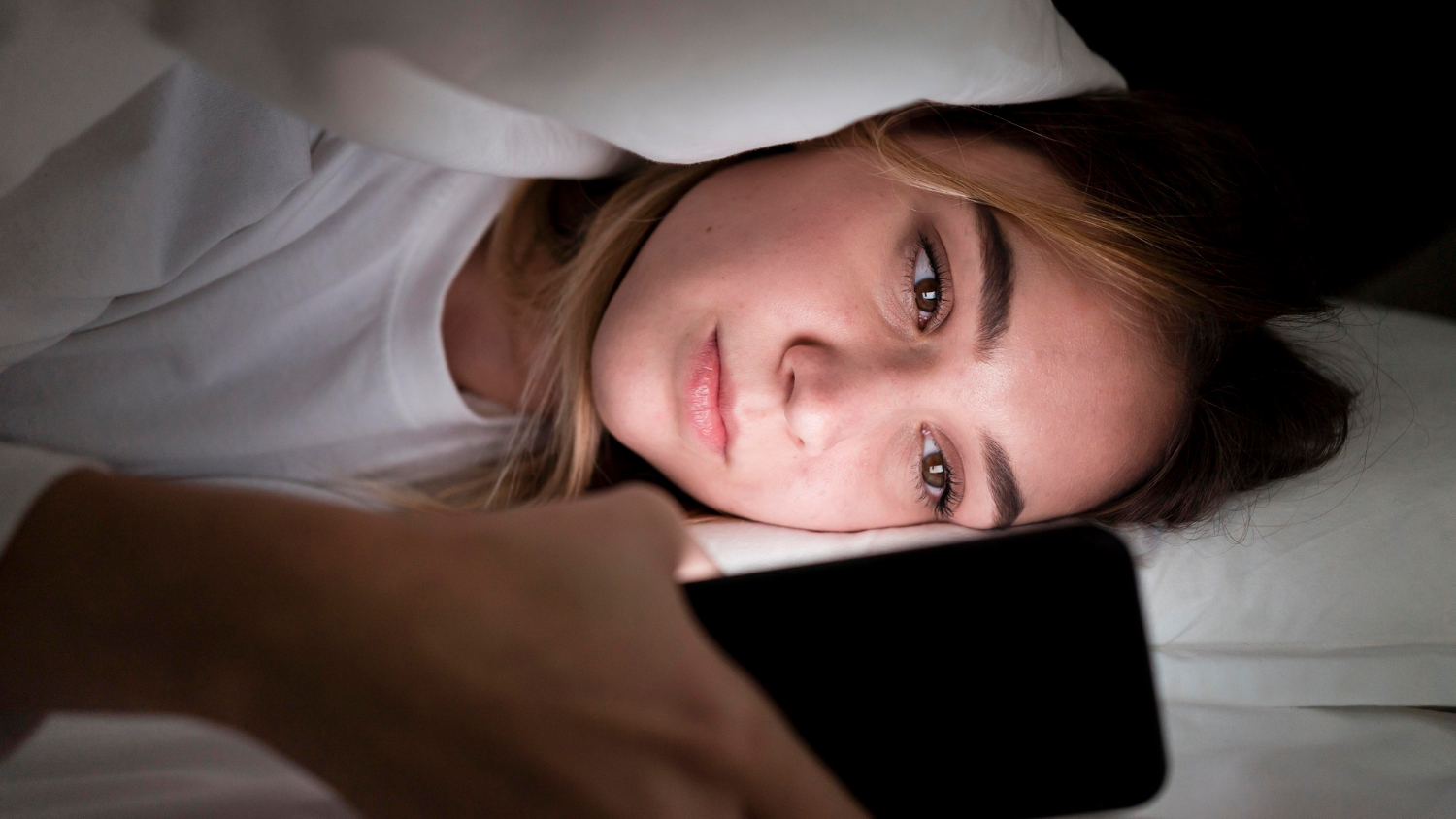
The goal is not to make bed a sterile place or create anxiety around using it correctly. The goal is to make the bed’s meaning clearer. If you want your brain to treat bed as a sleep cue, it helps if bed is not also the most reliable place for late-night stimulation.
This can take time. Associations are built through repetition, and they change through repetition. But even small changes can make a difference when they are specific and consistent.
Why this pattern can feel more fixable once you see it clearly
It is easy to worry when sleep feels inconsistent. But this particular pattern often has a practical explanation: your body was moving toward sleep, then the evening sequence shifted it back toward wakefulness.
That is good news because it means the pattern may be changeable.
You do not necessarily need to diagnose yourself with a sleep disorder, overhaul your life, or collect a hundred sleep hacks. A better starting point is to pay attention to the exact part of the evening where the problem happens: the time between early sleepiness and actual bedtime.
What light did you see? What did you do? What did your brain expect? Did you protect the sleepy state, or did you accidentally restart the day?
Those questions are small, but they are powerful because they match the problem. This is not a general “how to sleep better” issue. It is a timing-and-transition issue.
The more precisely you understand the pattern, the less random it feels.
A simple way to think about it
If you are sleepy at 8 PM but wide awake at bedtime, do not think of sleepiness as something you either “have” or “do not have.” Think of it as a state your body enters when enough sleep-promoting signals are aligned.
Earlier in the evening, those signals may have been aligned enough for sleep to feel close. Later, they may not have been.
You may have pushed through the first wave. You may have exposed yourself to brighter light. You may have moved into a more active routine. You may have checked something stimulating. You may have gotten a second wind. You may have taught your brain that bed is a place for activity. Or your intended bedtime may simply be later than the time your body was most ready to sleep.
None of that means your sleep is broken. It means your evening has a pattern.
Once you can see the pattern, you can begin to change it.
Sleep is shaped before bedtime
This pattern is a good example of how sleep is shaped by the signals, choices, and environments of the whole day.
The moment you feel wide awake in bed may seem like the problem, but the cause may have started earlier: when you first felt sleepy and pushed through it, when the lights got brighter, when the evening became stimulating again, or when bed became associated with wakeful activity.
Sleep does not begin at bedtime. Bedtime is where the day’s signals arrive.
If you often feel sleepy early but awake later, the next step is not to add random sleep tips. It is to understand your evening sequence with more precision. Notice the first sleep signal. Protect the transition. Keep light and activity aligned with the night you want to have. Make the bed a clearer cue for sleep.
The goal is not perfection. The goal is to stop accidentally turning a real sleep opportunity into a second wind.
Next up
That is all for now in Common Sleep Questions. A good next series is Fix Your Sleep Schedule, starting with How to Fix Your Sleep Schedule Naturally: A Practical Guide to Resetting Your Rhythm.