

How Late Meals Affect Sleep: Timing, Digestion, Blood Sugar, and Rest
A practical Academy guide to how evening meal timing fits into a daily plan for better sleep, and why what you eat, when you eat, and how your body responds can shape your readiness for rest.


Eating late at night does not automatically ruin your sleep. Some people can eat dinner close to bedtime and sleep normally, while others notice that a late meal leaves them warmer, more restless, more likely to wake up, or less restored the next morning. The difference often comes down to what you ate, how much you ate, how close it was to bedtime, and how your body responds.
The more useful question is not simply whether eating before bed is “bad.” A better question is whether your evening eating pattern helps your body shift into sleep or keeps it busy with digestion, metabolism, reflux, or stimulation at the time when it is trying to wind down. Sleep is not only shaped by what happens when your head hits the pillow. It is shaped by the actions, signals, and choices of the whole day, including when you get light, when you move, when you drink caffeine, when you eat, and how you transition into the evening.
This is why meal timing matters in a daily plan for better sleep. Food is not just fuel. Eating is also a timing signal. It activates digestion, changes blood sugar and insulin activity, influences body temperature, and can interact with your circadian rhythm. For some people, a heavy dinner or late-night snack can make the body feel less ready for deep, settled sleep.
Not everyone needs one fixed dinner time or one universal rule. What matters is understanding why meal timing belongs in a better sleep plan at all, so you can shape it around your own body and schedule.
Related: What a Daily Plan for Better Sleep Actually Includes shows how meal timing fits alongside light, caffeine, movement, and the evening transition.
Sleep is prepared across the day
It is easy to think of sleep as something that begins at night. You finish your day, get into bed, close your eyes, and hope sleep arrives. But your body does not experience sleep as a switch. It prepares for sleep gradually through the pattern of signals it receives across the day.
Morning light helps anchor the body’s sense of daytime. Movement and activity help organize energy use. Caffeine timing can either support alertness earlier in the day or interfere with sleep later. Meals tell the body when active fueling is happening. Evening light, temperature, stress, and routines all help shape whether the body feels like it is moving toward rest.
Late meals matter because they can place a strong “daytime activity” signal close to the time you want your body to sleep. This does not mean eating late is always harmful. It means meal timing is one of the daily levers that can either support or complicate the transition into sleep.
Better sleep is often built through this kind of ordinary daily action. Not through one dramatic intervention, but through a day that gives the body more coherent signals: active when it should be active, winding down when it should wind down, and recovering when it should recover.
Why late meals can affect sleep


Sleep depends on a gradual transition from daytime activity into nighttime restoration. As bedtime approaches, the body generally benefits from lower stimulation, a cooler core temperature, dimmer light, and a calmer internal state. A large meal late at night can work against that transition because digestion is an active process. Your stomach, intestines, pancreas, liver, and nervous system all have work to do after you eat.
This does not mean your body cannot digest during sleep. It can. But digestion may be more disruptive when the meal is large, rich, spicy, high in fat, high in sugar, or eaten very close to lying down. In those cases, the body may still be processing the meal when you are trying to fall asleep or stay asleep.
You might not experience this as obvious stomach discomfort. It may show up more subtly as warmth, restlessness, lighter sleep, strange dreams, heartburn, nighttime waking, or a sense that your sleep was technically long enough but not very restorative. The signal is not always loud, but it can still affect how ready the body feels for sleep.
The effect also depends on your baseline. Someone who eats an early dinner most nights may clearly notice the difference after a late heavy meal. Someone who regularly eats late may not notice an immediate contrast, but their sleep may still be less stable than it could be. Food timing does not need to become another rigid rule. It is simply one of the levers that can make sleep easier or harder.
Digestion can keep the body more active at night
After a meal, your body shifts resources toward digestion and nutrient processing. This is normal and healthy during the day. The problem is that a large late meal can create internal activity at the same time your sleep system is trying to downshift.
Many people treat the evening as if sleep preparation begins only with a bedtime routine. But the body’s preparation for sleep is more than a routine. It is a physiological transition. Heart rate, body temperature, hormone signaling, alertness, and digestive activity all play a role. When you eat a large meal close to bed, you may be asking the body to move in two directions at once: digest and rest.
This can be especially noticeable after meals that are heavy or slow to digest. High-fat meals, large portions, alcohol, rich desserts, and spicy foods can all be more difficult for some people in the evening. A lighter meal earlier in the night may allow digestion to settle before sleep, while a large late meal may keep the body more activated for longer.
This is one reason meal timing belongs in a daily sleep plan. It is not because dinner is the only thing that matters. It is because sleep quality depends on whether the day’s major signals fit together.
Late meals can worsen reflux and heartburn


One of the clearest ways late eating can disturb sleep is through reflux. Lying down soon after eating can make it easier for stomach contents to move upward into the esophagus, especially if the meal was large, fatty, spicy, acidic, or paired with alcohol. But it is not only about posture. Timing matters because late eating can arrive just when the body was already shifting out of active daytime processing and toward the work of nighttime recovery.
Reflux is one reason the timing of a meal can matter even when the food itself is not “unhealthy.” A nutritious dinner can still be poorly timed if it is large and eaten right before bed, or if it lands well after your usual eating window when your body was already moving toward rest. In that situation, the body has to redirect attention back toward digestion when it was just preparing for sleep. That can leave both digestion and sleep less settled.
If reflux is part of the pattern, the solution is often not just “eat healthier.” It may be more useful to create more space between dinner and bed, keep your evening eating window reasonably consistent, reduce the size of the final meal, avoid personal trigger foods at night, and pay attention to whether symptoms worsen after late or heavy meals.
People with frequent reflux, chest discomfort, vomiting, or persistent nighttime symptoms should get personalized medical guidance rather than treating it as a simple sleep habit issue. A daily plan can help organize the basics, but persistent symptoms may need more than routine habit changes.
Read: How Alcohol, Caffeine, and Late Meals Shift Stages for a broader look at how food and drink can reshape the night.
Blood sugar changes can influence sleep stability


Meal timing can also affect sleep through blood sugar and metabolic regulation. After you eat, blood glucose rises and your body responds by releasing insulin and moving nutrients into storage or use. This process is normal, but the same meal can affect the body differently depending on when it is eaten. For many people, the body handles glucose less efficiently late in the evening than earlier in the day.
This is one reason late-night meals or sugary snacks can feel disruptive. A large carbohydrate-heavy meal or dessert close to bedtime may cause a stronger glucose rise, followed later by a drop that can contribute to waking, restlessness, hunger, sweating, or a wired-but-tired feeling in some people. In some cases, that drop can look more like a reactive blood sugar crash during the night, which may disturb sleep directly or wake you up feeling like you need to eat something to steady yourself. Not everyone experiences this strongly, and the details vary by person, meal composition, activity level, insulin sensitivity, and overall health.
This does not mean carbohydrates are bad or that everyone needs to avoid food at night. It means late eating can create metabolic movement during a time when the body is trying to become stable and restful. If you often wake up during the night after late meals, or if you feel worse after late desserts or heavy dinners, blood sugar variability may be one possible part of the picture.
People with diabetes, hypoglycemia, metabolic conditions, pregnancy-related glucose issues, or medication considerations should not rely on generic sleep advice for meal timing. In those cases, bedtime food may sometimes be necessary or beneficial, and the right approach should be personalized.
Meal timing is also a circadian signal


Your body has a central clock in the brain that is strongly influenced by light, but other tissues also have timing systems. Organs involved in digestion and metabolism respond to food timing. That means meals are not only sources of calories and nutrients; they also help tell the body when active fueling is happening.
When eating regularly happens late at night, it can send a mixed signal. Your light environment may be saying night, your desired bedtime may be saying sleep, but your digestive and metabolic systems may be receiving a signal that it is still an active feeding window. Over time, this can make the daily rhythm less clear.
This is part of why better sleep is not only about the bedroom. A person can have a comfortable mattress, a dark room, and enough time in bed, but still struggle if the day’s timing signals are inconsistent. Late meals, late caffeine, late bright light, late intense work, and late stress can all push the body toward alertness at the wrong time. Each signal may be manageable on its own, but together they can make sleep feel harder than it should.
A daily plan for better sleep helps organize these signals. It does not reduce sleep to one rule. It helps the day make sense as a sequence of actions that support the body’s natural transition from wakefulness to rest.
The size and type of meal matter


A small snack and a heavy late dinner are not the same thing. The body usually responds differently to a small, simple snack than to a large meal with alcohol, dessert, and a lot of fat or spice. When people ask whether eating before bed affects sleep, the honest answer is: it depends on what “eating” means.
A large late meal is more likely to interfere with sleep because it requires more digestion and creates a larger metabolic response. A spicy or acidic meal may be more likely to trigger reflux. A sugary snack may create more blood sugar movement. Alcohol may make a person feel sleepy at first but can fragment sleep later in the night. A small protein-containing snack may be neutral or even helpful for some people, especially if hunger itself is keeping them awake.
This is why rigid rules often fail. “Never eat after 7 p.m.” is too simplistic for real life. Someone who sleeps at 10 p.m., someone who sleeps at 1 a.m., someone who trains in the evening, and someone who works a late shift do not need the same exact eating schedule. The useful principle is to give your body enough time and the right kind of evening intake so that sleep is not competing with heavy digestion.
Related: When Should You Stop Drinking Caffeine for Better Sleep? is worth pairing with this if your late dinner also tends to come with coffee, soda, or energy drinks.
What to do if you eat late

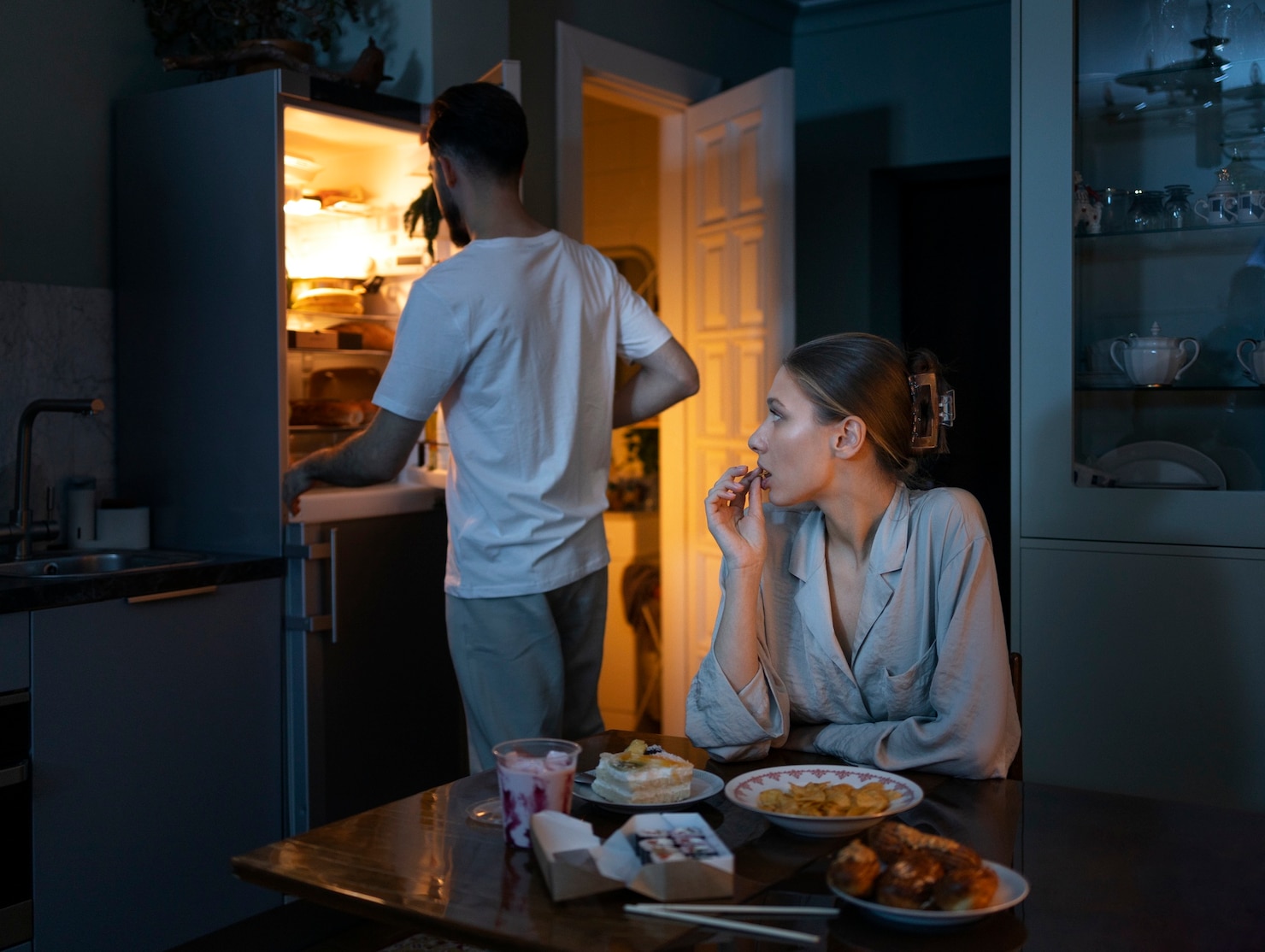
If you often eat late, the first step is not to panic or impose a perfect rule. Instead, notice the pattern. Do you sleep worse after late meals in general, or only after certain kinds of meals? Is the problem worse when the meal is large? Does it happen after spicy food, alcohol, dessert, or very high-fat meals? Do you wake with reflux, nausea, warmth, thirst, or hunger? Do late meals affect sleep onset, sleep quality, or how you feel the next morning?
Once you know the pattern, you can adjust intelligently. For many people, the simplest improvement is to move the main evening meal earlier when possible. A useful target is to finish a larger dinner at least a few hours before bed, then keep anything closer to bedtime smaller and easier to digest. This gives the body more time to process the meal before sleep.
If your schedule makes late dinner unavoidable, focus on reducing the sleep cost rather than chasing an ideal schedule. A late meal that is lighter, calmer, and less reflux-triggering may be much better than a large heavy meal. You might also shift more calories earlier in the day, prepare an easier dinner ahead of time, or make the late meal smaller and save heavier foods for earlier meals.
This is the difference between a fixed tip and a useful daily plan. A tip says, “Do not eat late.” A plan asks what is realistic for your schedule, what your body responds to, and how the rest of your day can support the sleep you want tonight.
A practical evening meal framework


A good sleep-supportive meal schedule is not about perfection. It is about creating a smoother transition from daytime fueling to nighttime recovery. For many people, that means eating the main dinner earlier, avoiding very heavy meals close to bed, and treating late snacks as small adjustments rather than a second dinner.
A practical framework looks like this:
- Eat your largest evening meal earlier when your schedule allows.
- Leave a buffer between a full dinner and bedtime.
- Keep late-night food smaller if you need to eat close to sleep.
- Pay attention to reflux triggers such as large portions, spicy foods, acidic foods, alcohol, and lying down too soon.
- Notice whether late sugar or heavy carbohydrates lead to waking or restless sleep.
- Keep your eating window reasonably consistent, while avoiding a level of rigidity that creates unnecessary stress.
This kind of approach is flexible enough for real life. It also respects the fact that sleep is personal. For many people, a reasonably consistent evening eating window works better than making the decision from scratch every night. The useful question is which pattern helps your body feel calm, settled, and ready for sleep without creating a schedule you cannot realistically maintain.
When a bedtime snack may help


Eating close to bed is not always a problem, but it should be more of a caveat than the main strategy. If you are genuinely hungry, under-fueled, very active, or prone to waking up hungry, a small snack may sometimes help you sleep better. Going to bed hungry can be its own form of stress. It can make it harder to fall asleep, increase nighttime waking, or create a restless feeling that is easy to mistake for anxiety or insomnia.
The key is to distinguish a small sleep-supportive snack from a late meal or dessert that restarts the body’s active digestion window. A modest, easy-to-digest snack is a very different signal from cake, chips, or a heavy second dinner right before bed. If a snack is needed, it should usually be simple enough that it does not pull the evening back toward active digestion.
This is also where personal response matters. For some people, a small snack can be a useful intermediate step while building a more stable evening routine or a more consistent eating window. But in general, the closer you are to bedtime, the more you want food to stay light, calm, and limited rather than turning into another full eating event.
Late meals are one action in a larger sleep day
Meal timing is important, but it is only one part of sleep readiness. A late dinner may be more disruptive when it is combined with bright evening light, late caffeine, stressful work, alcohol, intense exercise, or an inconsistent bedtime. On the other hand, a reasonably timed dinner may not be enough to fix sleep if the rest of the day is working against your rhythm.
This is why better sleep usually comes from a daily system rather than a single rule. Your body is constantly reading signals from your behavior and environment. Morning light, movement, caffeine, meal timing, evening light, temperature, stress, and bedtime consistency all help shape when you feel alert and when you feel ready for sleep.
Late meals affect sleep because they can send the wrong kind of signal at the wrong time. But they are not the whole story. The deeper lesson is that sleep is prepared across the day, and food timing is one of the ways your body learns when to be active and when to recover.
This is also why better sleep has to become tangible. It is not only a future goal or an abstract idea. It is practiced through today’s choices: when you eat, how you wind down, what kind of light you get, how your body moves, and whether your evening helps your biology shift into rest.
The bottom line
Eating late can make sleep worse, especially when the meal is large, heavy, spicy, sugary, or eaten close to lying down. It can affect sleep through digestion, reflux, blood sugar changes, body temperature, and circadian timing. But the answer is not a universal ban on nighttime eating. The better approach is to understand your own response and create an evening rhythm that helps your body shift into rest.
For many people, earlier or lighter evening eating is a simple way to improve sleep quality. If late meals are unavoidable, reducing the size of the meal, choosing easier-to-digest foods, and leaving even a small buffer before bed can still help.
Better sleep is not built from isolated hacks. It comes from aligning the daily signals your body receives so that, by the time night arrives, sleep feels like the natural next step. Meal timing is one part of that larger pattern: one daily action that helps turn better sleep from an idea into something your body can actually experience tonight.
Next up
Next up in A Daily Plan for Better Sleep: When Is the Best Time to Exercise for Better Sleep?.