

When Is the Best Time to Exercise for Better Sleep?
A practical guide to movement as one part of a better sleep day, showing how exercise timing, intensity, stress, and recovery can help your body move from daytime activation into nighttime rest.


Exercise is one of the most useful daily actions for better sleep, but the timing can be confusing. Some people hear that morning workouts are best. Others only have time to exercise at night. Some feel relaxed after an evening workout, while others feel alert, hot, and wired for hours.
There is no single best time to exercise for everyone. Movement can support sleep in several ways: it can help build sleep pressure, reduce stress, support circadian rhythm, improve energy during the day, and give the body a stronger reason to recover at night. But the effect depends on the type of movement, the intensity, how close it is to bedtime, and how your own body responds.
A useful starting point is this: most people sleep best when they move regularly during the day and avoid very intense workouts too close to bedtime. Morning and daytime exercise are often the easiest choices for sleep, but evening movement can still be helpful when it is timed well and matched to the body’s need to wind down.
You do not need one universal workout rule. You need to understand movement as one part of a better sleep day.
Sleep is shaped across the whole day
Sleep does not begin when your head hits the pillow. Your body is preparing for sleep across the whole day through the signals it receives: light in the morning, caffeine timing, meals, stress, movement, temperature, evening routines, and the environment you create at night.
Exercise is one of those signals. During the active part of the day, movement tells the body that it is time to be awake, engaged, and physically capable. Later, when the day begins to quiet down, that earlier activity can support the body’s transition into recovery and rest.
Related: What a Daily Plan for Better Sleep Actually Includes is a useful overview of how movement fits alongside light, meals, caffeine, and the sleep opportunity itself.
This is why exercise matters for sleep beyond fitness. It is not only about burning calories or building strength. It is part of the daily rhythm that helps the body understand when to be active and when to recover.
In a better sleep day, movement has a place. The question is not simply “Should I exercise?” The better question is, “What kind of movement belongs in this part of my day?”
Morning movement can help start the day clearly


Morning exercise can be especially helpful for people who wake up groggy, feel slow to get going, or struggle to create a clear start to the day. Movement increases alertness, raises body temperature, and helps the body shift out of sleep mode. When paired with outdoor light, even a simple walk can become a strong daytime signal.
This does not mean everyone needs a hard workout first thing in the morning. For many people, the best morning movement is simple: walking outside, stretching, doing mobility work, cycling to work, or doing a moderate workout after waking. You do not need to force the body into intensity immediately. You just want a clear transition from night into day.
Morning movement can also help with consistency. If workouts often get pushed aside by work, errands, fatigue, or evening plans, exercising earlier may make the habit easier to protect. This matters because the sleep benefits of exercise usually come from regular movement over time, not from one perfectly timed workout.
Still, morning exercise is not automatically the best choice for everyone. Some people feel stiff, under-fueled, or less physically capable early in the day. Others would have to cut sleep short to fit in a morning workout, which defeats the purpose. A daily plan for better sleep should support the whole day, not improve one habit by damaging another.
Read: Morning Sunlight vs. Indoor Light: Why It Matters if you want to pair movement with a stronger morning light cue.
Daytime and early evening workouts often fit sleep best


For many people, the most sleep-friendly window for moderate or intense exercise is late morning, afternoon, or early evening. This gives the body the benefits of movement while leaving enough time to cool down, eat, recover, and transition into the night.
A run after work, a strength session in the late afternoon, a fitness class before dinner, or a long walk in the early evening can all support sleep when they fit naturally into the day. The body gets the activation it needs, but the workout does not collide with the final wind-down period before bed.
This timing can be especially useful for people who carry stress from work into the evening. Exercise can create a bridge between the demands of the day and the slower pace of night. Instead of going directly from work stress to dinner, screens, and bed, movement gives the body and mind a chance to process some of that activation.
The timing still depends on what happens afterward. A hard workout that ends at 6:30 p.m. may be fine if bedtime is 11:00 p.m. and the evening gradually becomes calmer. The same workout may be more disruptive if it ends at 9:30 p.m., is followed by bright screens and work messages, and bedtime is supposed to be 10:30 p.m.
Exercise timing is not only about the workout. It is about how the workout fits into the rest of the day.
Does working out at night affect sleep?


Working out at night can affect sleep, but it depends heavily on intensity, timing, and personal response. The old advice that exercise before bed is always bad is too simple. Many people can do light or moderate activity in the evening without harming sleep, and some find that gentle movement helps them relax.
The bigger concern is intense exercise close to bedtime. Hard intervals, heavy lifting, competitive sports, late-night races, and highly stimulating classes can raise heart rate, increase body temperature, and leave the nervous system in a more activated state. For some people, that makes it harder to fall asleep or reduces the feeling of deep rest.
This does not mean evening workouts are forbidden. It means the final hours before bed should have a different purpose than the active part of the day. Earlier in the day, movement can be energizing. Later in the evening, movement should usually become more calming, unless you know from experience that your body handles late intensity well.
A practical rule is to keep vigorous workouts at least a few hours before bedtime when possible. If your bedtime is 11:00 p.m., a hard session ending around 6:30 or 7:00 p.m. may be very different from one ending at 10:15 p.m. The closer exercise gets to bedtime, the more intensity matters.
Light movement in the evening can support the transition into rest

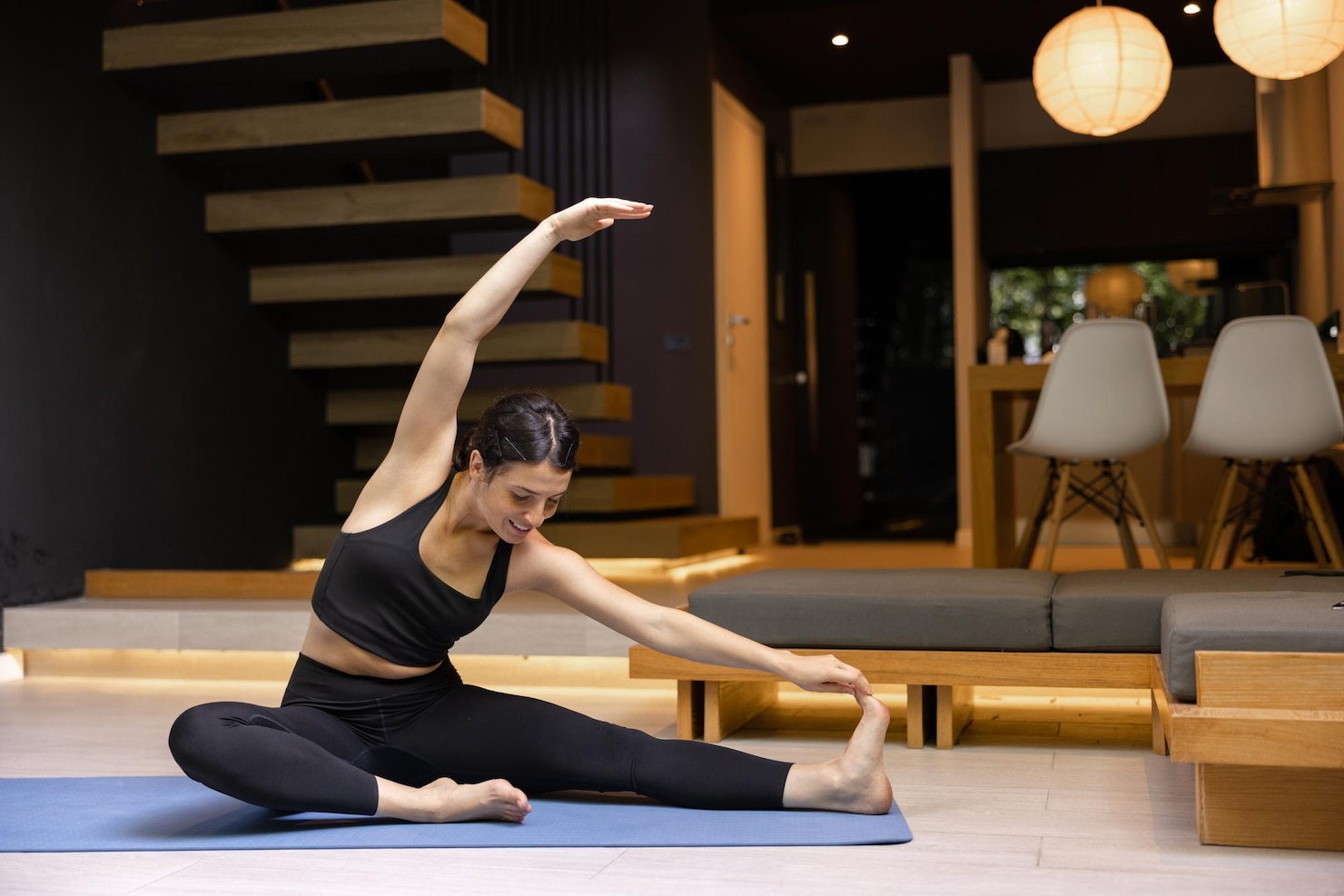
Not all evening movement is the same. A gentle walk after dinner is very different from a high-intensity workout. Light activity can help digestion, reduce stress, and create a calmer transition into the night. It may also help people who spend most of the day sitting and feel physically restless by bedtime.
Good evening options include walking, stretching, easy mobility work, relaxed cycling, gentle yoga, or slow bodyweight movements. These activities are not meant to maximize performance. They are meant to help the body move out of daytime tension and toward recovery.
This distinction matters because many people hear “do not exercise at night” and become unnecessarily rigid. A late-night sprint workout may interfere with sleep, but a short walk under dimmer evening light may support it. The question is not simply whether movement happens at night. The question is whether the movement is activating or calming.
For sleep, the evening should generally become less intense over time. Bright light, stressful work, heavy meals, caffeine, emotional conflict, and hard exercise can all push the body toward alertness. Gentle movement can do the opposite when it is part of a calmer evening pattern.
Intensity matters more as bedtime gets closer


The closer you get to bedtime, the more carefully you should think about intensity. Morning and daytime exercise can usually be more demanding because the body has many hours to recover before sleep. Late evening exercise gives the body less time to return to a restful state.
Light movement is usually the safest near bedtime. This includes walking, stretching, gentle yoga, easy mobility, and relaxed movement that does not leave you breathing hard. For many people, this can fit into the evening without causing problems.
Moderate exercise is more individual. A steady bike ride, moderate strength session, or easy run may be fine earlier in the evening, especially if it ends a few hours before bed. But if moderate exercise leaves you energized, hungry, overheated, or mentally stimulated, it may need to move earlier.
High-intensity exercise is the most likely to interfere when it happens late. Intervals, heavy lifting, intense sports, hard conditioning, or workouts that feel competitive can be great for fitness, but they are not always ideal right before sleep. These sessions often need more space before bedtime.
This is why blanket advice often fails. The same “evening workout” can mean a peaceful walk, a moderate gym session, or an intense training block. Those are not the same signal to the body.
Body temperature is part of the timing problem




One reason late intense exercise can affect sleep is temperature. Your body does not simply fall asleep because you decide it is time. As night approaches, the body normally moves toward a lower core temperature, and this cooling process is part of the transition into sleep.
Exercise raises body temperature. That is useful during the day, but it can become a problem when the body is supposed to be cooling down. If a workout is intense and late, the body may still be warm and activated when you are trying to fall asleep.
This does not mean you need to avoid all heat or movement in the evening. It means you should leave room for the body to come down. A cooler bedroom, dimmer light, a calmer post-workout routine, and enough time between exercise and bed can all help the body shift from activation to rest.
If you notice that late workouts make you feel physically hot in bed, restless, or unable to settle, temperature may be part of the reason. In that case, moving the workout earlier or lowering the intensity may improve sleep more than adding another bedtime trick.
Related: The Role of Temperature in Sleep Architecture goes deeper on why body temperature matters so much at bedtime.
Exercise can also affect stress and alertness


Exercise is not only physical. It also affects the nervous system. For many people, movement reduces stress and improves mood. A workout can clear mental tension, create a sense of completion, and make the evening feel easier.
But exercise can also be stimulating. Competitive games, intense classes, heavy lifts, loud gyms, bright lights, pre-workout supplements, and late-night performance goals can all make the body feel more alert. Even if the exercise itself is healthy, the total context may push the nervous system in the wrong direction for sleep.
This is why the best time to exercise for sleep depends partly on how you feel afterward. Some people feel calmer after training. Others feel awake, hungry, mentally charged, or restless. Neither response is wrong. It is information.
A good sleep plan pays attention to your response rather than forcing a universal rule. If a 7:00 p.m. workout helps you relax and you sleep well, it may be fine. If the same timing makes you lie awake, it is probably too late, too intense, or surrounded by too much stimulation.
What if night is the only time you can exercise?


If night is the only realistic time you can exercise, it is usually better to move than to do nothing. You do not need to give up on exercise. You just need to make the workout more sleep-compatible.
Start by adjusting intensity. A late workout does not need to be your hardest session of the week. You might keep intense training for weekends or earlier days when possible, and use evening sessions for strength technique, easy cardio, mobility, or moderate work that does not leave you wired.
Next, protect the wind-down after exercise. Try to move from the workout into lower light, a cooler environment, a simple meal if needed, and less stimulating activities. Avoid turning the post-workout period into a second daytime block filled with bright screens, work, and high stimulation.
Finally, watch your actual sleep. If you fall asleep normally, sleep through the night, and wake feeling restored, your evening exercise may be working. If your sleep gets worse, experiment with finishing earlier, reducing intensity, shortening the session, or shifting harder training to another day.
A daily plan is not supposed to punish you for having a real schedule. It should help you make the best possible choice within the day you actually live.
The best time to exercise for better sleep


For most people, the best time to exercise for better sleep is the time that allows regular movement without pushing intense activation too close to bedtime. Morning movement can help start the day clearly, especially when paired with light. Daytime and early evening workouts often give the best balance between activity and recovery. Late evening exercise can still work when it is lighter, calmer, and followed by a real transition into rest.
A practical way to think about exercise timing is this:
- Use morning movement to wake the body and create a stronger daytime signal.
- Use daytime or early evening workouts for moderate to intense training.
- Use late evening movement for walking, stretching, mobility, or gentle recovery.
- Avoid very intense workouts close to bedtime if they make you feel wired, hot, hungry, or restless.
- Pay attention to your own response instead of assuming one rule applies to everyone.
The most important point is that exercise timing should support your whole-day rhythm. Better sleep is not created by one isolated habit. It comes from the way your day is structured: when you get light, when you move, when you eat, when you consume caffeine, how your environment changes at night, and whether your body receives a clear signal that the day is ending.
Exercise is one of the strongest daily levers because it connects the active body to the resting body. Used well, it helps make the day feel like day, so the night can feel like night.
A practical way to adjust the timing
If you are not sure when to exercise, do not expect one day to tell you everything. Choose one timing pattern and stay with it for at least a week so your body has time to respond and you have time to notice the difference. For example, you might stick with morning walks, afternoon training, early evening workouts, or replacing late intense sessions with gentler movement.
Look for simple signals. How long does it take to fall asleep? Do you wake during the night? Do you feel physically hot in bed? Do you wake naturally or feel heavy and groggy? Do you feel calmer after exercise or more activated?
The right timing is the one that improves both consistency and recovery. A “perfect” workout time that you cannot maintain is not very useful. A realistic routine that helps you move regularly, sleep deeply, and feel better the next day is much more valuable.
This is also why the full daily pattern matters. Exercise does not exist in isolation. A late workout combined with late caffeine, bright screens, and a heavy dinner may affect sleep differently than the same workout inside a calmer evening routine. Your body responds to the full pattern.
The takeaway
Exercise is good for sleep, but timing still matters. Morning movement can help activate the day. Daytime and early evening workouts often give the body enough time to recover before bed. Late-night intense exercise can disrupt sleep for some people, but gentle evening movement may help the body relax.
The best approach is flexible: move regularly, keep harder sessions away from bedtime when possible, use lighter movement later in the evening, and pay attention to your own response.
Better sleep is not about finding one universal exercise time. It is about building a daily rhythm that helps your body know when to be active, when to recover, and when to rest.
Next up
Next up, if your timing itself is off, How to Fix Your Sleep Schedule Naturally: A Practical Guide to Resetting Your Rhythm is a practical next read.