

Why Do I Sleep Better When I Don’t Have to Wake Up Early?
Why sleep can feel effortless on an open morning but strangely difficult when an alarm, early shift, flight, or important day is waiting.

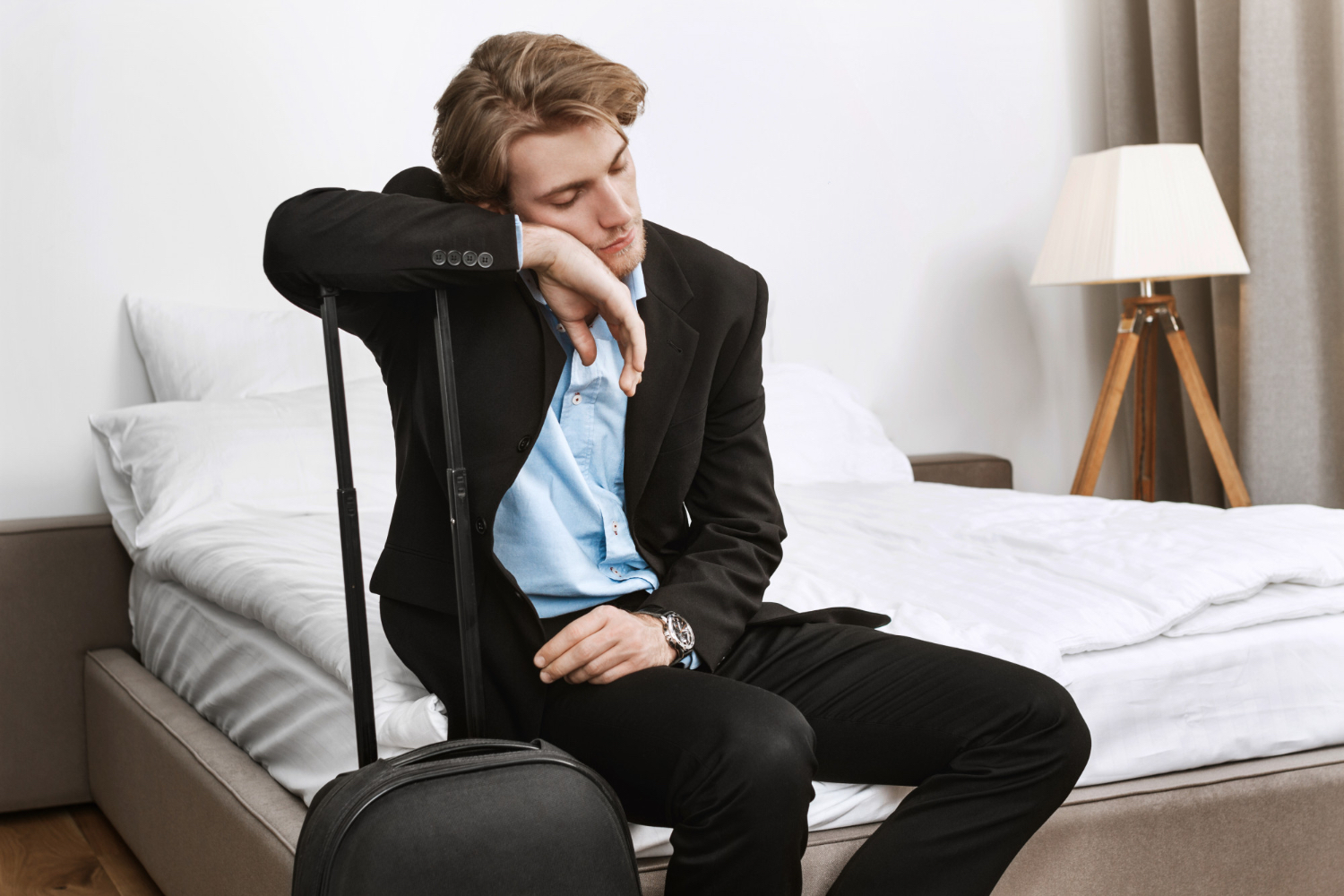
You may sleep normally when tomorrow is open, then struggle to fall asleep on the exact night when sleep seems most important. An early shift, flight, exam, appointment, or demanding workday is waiting in the morning, so you go to bed intending to be responsible. Instead of falling asleep, you become unusually alert.
The difference is often not that you suddenly lost your ability to sleep. A morning deadline can change the way you approach the entire night. Sleep begins to feel like a task that must be completed within a shrinking window, and your attention turns toward whether it is happening quickly enough.
That pressure can keep you awake even when you are tired. But it is not always purely anxiety. If waking early requires you to sleep much earlier than your body is accustomed to, your biological timing may also be working against the schedule you are trying to follow.
The short answer
You may sleep better when you do not have to wake up early because an open morning removes the pressure to fall asleep on command. Without an alarm or fixed deadline, you are less likely to monitor the time, calculate how many hours remain, or imagine how difficult tomorrow will be if you sleep poorly.
When you do need to wake up early, part of your mind may remain on watch. You notice whether you are asleep yet, wonder whether the alarm will wake you, and repeatedly assess how much sleep is still possible. This creates cognitive arousal: an alert, monitoring state that is poorly suited to letting sleep happen naturally.
There may also be a genuine timing mismatch. If you normally fall asleep around midnight but get into bed at 9:30 because you need to wake at 5:00, the earlier bedtime does not instantly move your circadian rhythm or create several additional hours of sleep pressure. You can be worried about sleeping and biologically unready to sleep at the same time.
Why an alarm can affect the night before it rings
An alarm does not only represent a sound that will occur in the morning. It represents an obligation.
You may need to wake at a certain time, avoid oversleeping, perform well despite limited rest, or arrive somewhere that cannot be postponed. The alarm becomes attached to the consequences of getting sleep wrong. Even before you lie down, you may already be calculating when you need to fall asleep and how many hours you can still get.
On a night without a deadline, the experience is different. You can become sleepy when you become sleepy. If it takes a little longer, the delay may not seem important. There is no urgent reason to evaluate every passing minute, so sleep is allowed to remain an automatic process rather than a performance.
This difference can be especially noticeable before events that are unusual or important. You might sleep adequately before an ordinary day but become alert before a flight, interview, presentation, medical appointment, or first day at a new job. The more you believe tomorrow depends on sleeping perfectly tonight, the more attention you may direct toward sleep.
Sleep becomes harder when it becomes a performance
Sleep is unusual because it is something you can prepare for but cannot directly execute.
You can lie down, close your eyes, darken the room, and stop engaging with the day. You cannot consciously perform the final transition into sleep in the same way that you can decide to stand up or switch off a lamp. That transition happens when the biological drive for sleep is strong enough and the systems supporting wakefulness become quiet enough.
Trying harder can therefore have the opposite of the intended effect. You begin checking whether your body feels relaxed, whether your thoughts have stopped, and whether sleep is approaching. Each check requires attention, and attention keeps you involved in the process you are trying to let happen.
This is sometimes described as sleep effort: the deliberate attempt to make sleep occur. Sleep effort is understandable, especially when tomorrow matters, but it can increase the sense that you are being tested. Instead of resting in bed, you may feel as though you are waiting for evidence that you are succeeding or failing.
The result is a frustrating contradiction. You are trying to protect tomorrow by securing enough sleep, but the effort to secure it creates more alertness tonight.
Clock-watching turns time into a threat
Looking at the clock once may seem harmless. The problem is what often happens immediately afterward.


You see that it is 11:42 and calculate that you could still get a reasonable night if you fell asleep soon. Later, you check again and discover that it is 12:26. Now the remaining window feels smaller, tomorrow feels closer, and the need to sleep becomes more urgent.
The calculations tend to continue:
- “I only have six hours left.”
- “Now it is less than five.”
- “I am going to feel terrible tomorrow.”
- “Why am I still awake?”
- “I have to fall asleep right now.”
The clock is no longer merely showing the time. It is repeatedly updating the stakes.
Research on insomnia has found that clock monitoring can increase pre-sleep worry and contribute to longer perceived sleep onset. It can also distort your sense of how long you have been awake. Quiet wakefulness in a dark room does not give the brain many landmarks for estimating time, so a period that feels extremely long may not match the amount of time that has actually passed.
Turning the clock away does not make the morning obligation disappear, but it removes the continuous countdown. Set the alarm, make sure it is loud enough, and place the display where you cannot repeatedly consult it from bed.
Fear of missing the alarm can keep part of you on watch
Some people have trouble falling asleep before an early morning. Others fall asleep but wake repeatedly throughout the night.
You may surface at 2:00, 3:30, and 4:45 to check whether the alarm has already gone off. You might dream that you overslept, wake shortly before the alarm, or repeatedly verify that your phone is still charged and the volume is still on.
This pattern makes sense when the brain treats the morning as something important that must not be missed. Sleep does not completely disconnect you from meaningful signals in your environment, and anticipation can shape how lightly or restlessly you sleep. The problem is that repeated checking can fragment the night even when the alarm system is working perfectly.
A reliable setup can reduce some of this uncertainty. Use an alarm you trust, keep the device powered, and add one backup alarm when the consequences of oversleeping are unusually high. More alarms are not always more reassuring; setting six alarms a few minutes apart may keep the morning feeling chaotic and reinforce the belief that you cannot trust yourself to wake.
Prepare whatever else could occupy your mind before getting into bed. Lay out your clothes, pack your bag, confirm the departure time, and write down anything that must happen in the morning. The aim is not to create a perfect routine. It is to give your mind fewer unfinished tasks to supervise overnight.
Sometimes the bedtime you are requesting is simply too early
Not every difficult night before an early morning is caused by sleep anxiety.
Sleep timing is partly governed by two interacting biological processes. Sleep pressure builds during the time you are awake, while your circadian system changes your tendency toward sleep and alertness across the day. You are usually most able to fall asleep when sufficient sleep pressure overlaps with a circadian phase that supports sleep.
An early obligation often leads to a simple calculation: “I need eight hours, so I should go to bed three hours earlier than usual.” The arithmetic may be correct, but your biology may not move three hours earlier just because you changed the time on the clock.
If you woke at your usual time, spent a normal day awake, and then attempted sleep far earlier than usual, you may not have accumulated enough sleep pressure. Your circadian system may also still be promoting evening alertness. Lying in bed early can then give you more time to notice that sleep is not happening, which adds psychological pressure to an existing biological mismatch.
This is why you can feel tired in a general sense but remain unable to fall asleep at the requested time. Fatigue and sleep readiness overlap, but they are not identical.
For a deeper explanation of the drive that builds while you are awake, read Sleep Pressure and Adenosine: The Build-Up to Bed.
One unusually early morning is different from every morning feeling early
If you need to catch a 6:00 AM flight once, there may be no elegant way to make your sleep system fully adapt. You can prepare well, avoid making the night more stressful than necessary, and accept that you may get less sleep than usual.
One short night is unpleasant, but it is also survivable. Treating it as a catastrophe can make the night harder without producing more sleep.
A recurring pattern deserves a different interpretation. If work or school requires you to wake at 6:30 every weekday, but your body still wants to fall asleep and wake several hours later, the problem may be larger than anxiety about the alarm. Your sleep schedule may be poorly aligned with the schedule your life requires.
In that situation, every workday wake-up feels “early” not merely because the clock time is early, but because it arrives early relative to your biological night. You may depend on an alarm to interrupt sleep, struggle to become alert in the morning, and then sleep much later whenever the obligation disappears.
The easier sleep you experience on weekends may partly come from reduced pressure, but it may also reveal your current timing. Without the alarm, you can fall asleep and wake closer to the schedule your body has been following all week.
This does not automatically mean your preferred weekend schedule is your fixed, unchangeable “natural” schedule. Light exposure, daily activity, meal timing, social habits, and inconsistent sleep times can all push your rhythm later. But it does suggest that repeatedly forcing an early wake time without helping the rest of your schedule move earlier may leave you fighting the same mismatch every night.
Why sleeping without an alarm can feel so different


A night without an alarm may remove several sources of friction at once.
You do not need to force an early bedtime. You are less likely to calculate the remaining hours. You may feel safer allowing thoughts to wander because there is no urgent need to become unconscious. You may also wake at a time that better matches the end of your biological night rather than being pulled out of sleep by an external deadline.
These differences can make weekend sleep feel deeper or easier even when the bedroom itself has not changed.
However, sleeping much later can also preserve the mismatch that makes the next early morning difficult. A later wake time reduces the time you will be awake before the following night and can expose you to light later in the morning or day. The immediate relief is real, but a large weekend shift can make returning to an earlier schedule feel like crossing a small time-zone boundary each week.
The useful lesson is not that alarms are inherently bad. It is that your sleep system works best when the time you need to wake is reasonably aligned with the time your body is prepared to sleep and wake.
Let rest be worthwhile even before sleep happens
When you cannot sleep and tomorrow is approaching, it is easy to treat every waking minute in bed as wasted time. That interpretation adds another layer of pressure: not only are you awake, but you believe being awake is actively ruining the night.
A gentler and often more useful approach is to let lying down and resting be worthwhile on its own.
You do not have to convince yourself that quiet rest is identical to sleep. It is not. But resting in a comfortable position, closing your eyes, relaxing your muscles, and temporarily setting aside the demands of the day can still feel restorative and pleasant. The night is not a complete failure merely because you have not yet crossed into sleep.
You might tell yourself:
I would prefer to sleep, but I do not have to make it happen right now. For this moment, I can simply lie here and rest.
This removes the immediate pass-or-fail test. Instead of asking every few minutes whether you are asleep yet, you give yourself permission to enjoy the physical relief of no longer having to do anything.
Paradoxically, that shift can make sleep more likely. When wakefulness is no longer treated as an emergency, there is less reason to monitor it. Your attention loosens, the pressure decreases, and sleep may arrive without being chased.
This should not become another technique you anxiously grade—“I have been accepting wakefulness for ten minutes, so why am I not asleep?” The value is in genuinely dropping the demand, not disguising a new attempt to force sleep.
How to make an early morning less disruptive
The most useful response depends on whether tomorrow is an exception or part of your normal life.
When it is a one-off early morning
Prepare the morning before you get into bed. Confirm the alarm, remove unnecessary decisions, and avoid repeatedly checking how many hours remain. Go to bed when you are reasonably sleepy rather than moving bedtime dramatically earlier and spending several extra hours awake in bed.
Most importantly, loosen the belief that tomorrow requires a perfect night. You may not feel your best after less sleep, but one imperfect night does not guarantee that the entire day will collapse. Rest quietly when you can, let sleep come if it comes, and handle the morning when it arrives.
When it happens every work or school night
Look beyond the final hour before bed. If the required wake time consistently arrives before your body is ready, you may need to shift the larger rhythm rather than repeatedly trying to force sleep earlier on command.
That usually means making gradual, coordinated changes to the timing of sleep and the signals that help set your body clock. A stable schedule, a clear morning light signal, appropriately timed evening light, and enough time awake before bed can help the desired bedtime become biologically easier rather than merely mandatory.
Do not expect moving bedtime earlier once to reset the system. Stay with a workable pattern long enough for your body to adapt.
Read How to Fix Your Sleep Schedule Naturally for a fuller guide to shifting sleep timing rather than fighting it one night at a time.
When the bed itself has become a place of pressure
If you regularly spend long periods in bed monitoring whether you are asleep, the bed can begin to cue alertness instead of sleep. You may feel calm in another room and then become tense as soon as you lie down because your mind has learned that bed is where the nightly struggle begins.
In that case, do not keep extending the battle. If you feel increasingly awake, frustrated, or activated, get out of bed for a while and do something quiet in dim light. Return when sleepiness is stronger. This helps preserve the association between bed and sleep rather than bed and prolonged effort.
The bigger lesson: sleep cannot be forced on command
When you sleep better without an alarm, the contrast can reveal two different forms of pressure.
The first is psychological: sleep feels important, so you monitor it, evaluate it, and try to make it happen. The second is biological: the schedule requires sleep and wakefulness at times your current rhythm does not readily support.
These can reinforce each other. A bedtime that is genuinely too early gives you more time to lie awake. Lying awake gives you more time to worry about the alarm. Worry increases alertness, and the resulting bad night makes the next early bedtime feel even more important.
You can interrupt that cycle from both directions. Reduce the immediate pressure by putting the clock out of sight, trusting a reliable alarm, preparing the morning in advance, and allowing quiet rest to have value even when sleep has not arrived. When the pattern is recurring, improve the alignment between your sleep schedule and the schedule your life actually requires.
The aim is not to stop caring about tomorrow. It is to create conditions in which protecting tomorrow does not require fighting with sleep tonight.
Bottom line
You may sleep better when you do not have to wake up early because there is no deadline turning sleep into a performance. Without an alarm, you are less likely to watch the clock, calculate lost hours, worry about oversleeping, or judge every moment of wakefulness.
When an early morning is unusual, lowering the stakes and allowing yourself to rest can make the night easier. You would prefer to sleep, but you do not need to force it. Letting go of that demand often creates more room for sleep to happen naturally.
When every required morning feels early, the alarm may be exposing a broader schedule mismatch. Rather than trying harder to fall asleep at an unnaturally early bedtime each night, it may be more useful to gradually align your sleep timing with the life you need to live.
Next up
Fix Your Sleep Schedule explores why your sleep timing can drift away from your daily obligations and how to begin bringing your biological night and real-life schedule back into alignment.